Ananias prayed often. This secret time with the Father guided all he did and was the only way he could carry the load he felt for the new church in Damascus. Great numbers of converts to the faith were joining believers who had come fleeing persecution in Jerusalem. It was an exciting time, seeing people set free from their sin and sickness, seeing relationships healed, seeing the Kingdom of God come. Some days Ananias could hardly believe he was privileged to be part of it.
But it was also a time of grave danger. The new faith had enemies who were serious about stopping the spread of this “rumor,” this “legend,” that the long-awaited Messiah had come at last. Not content with just killing Jesus, religious leaders were now after everyone who believed in him, both Jews and Gentiles.
Prayer was a lifeline. One day as this godly man came before his God, he felt more than the usual urgency. “What is it, Lord?” he asked and tried to quiet his own thoughts to listen.
Ananias felt himself slipping into a dream state as a vision unfolded. God called his name. He heard it.
“Here I am, Lord!”
“Go to the house of Judas on Straight Street and ask for a man from Tarsus named Saul, for he is praying. In a vision he has seen a man named Ananias come and place his hands on him to restore his sight.”
Ananias’ heartbeat sped up.
“Lord,” he answered, “We know of this Saul of Tarsus. I have heard reports of the evil he has done to your holy people in Jerusalem. And we hear he has come here with authority from the chief priests to arrest all who call on your name.”
Ananias’ heart was pounding now. Surely there was some mistake.
But the Lord said, “Go! This man is my chosen instrument to proclaim my name to the Gentiles and their kings and to the people of Israel. I will show him how much he must suffer for my name.”
Someone outside his room sneezed and Ananias was back in the present moment, the material world. The voice of the Lord was silent and his own thoughts were shouting. Saul of Tarsus here already! On Straight Street! Praying. And blind. Hadn’t the Lord said he was blind? Yes, he was sure of it. What did it mean? Would answering this call be a death warrant?
He wrestled with his thoughts, but in the end Ananias knew he would obey. As he walked toward Straight Street, he recited.
The LORD reigns, let the earth be glad; let the distant shores rejoice.
Clouds and thick darkness surround him; righteousness and justice are the foundation of his throne.
Fire goes before him and consumes his foes on every side.
His lightning lights up the world; the earth sees and trembles.
The mountains melt like wax before the LORD, before the Lord of all the earth.
The heavens proclaim his righteousness, and all peoples see his glory.
All who worship images are put to shame, those who boast in idols—worship him, all you gods!
Zion hears and rejoices and the villages of Judah are glad because of your judgments, LORD.
For you, LORD, are the Most High over all the earth; you are exalted far above all gods.
Let those who love the LORD hate evil,
for he guards the lives of his faithful ones and delivers them from the hand of the wicked.
Light shines on the righteous and joy on the upright in heart.
Rejoice in the LORD, you who are righteous, and praise his holy name.
As he walked toward this divine encounter, the Holy Spirit strengthened Ananias in purpose. What happened to him did not matter. He was only a servant, a slave of Christ. If God chose to release him into the hands of this killer, so be it. The Kingdom must advance. He got to be part of it!
The Spirit had also shown Ananias more details of Saul’s experience on the road: the flash of light, the vision of Jesus. By the time he reached Straight Street, Ananias did not for a second doubt that he was in the right place at the right time, and that indeed he was about to meet the infamous Saul of Tarsus.
“Is there a man named Saul here?” he asked at the door of the roomy house which often hosted guests.
“Yes, yes,” said Judas. “He came several days ago. How did you know? The man has barely spoken and not eaten a bite.” Judas led Ananias to a back room where a lifeless looking young man sat head in hands.
This was the terrible persecutor? The room was quiet as Ananias approached. Suddenly he was filled with compassion for this lost soul who had so much misplaced devotion to God. “Brother Saul,” he said gently, putting his weathered hands on the shoulders of the young scholar, “the Lord—-Jesus, who appeared to you on the road as you were coming here-—has sent me so that you may see again and be filled with the Holy Spirit.”
The face turned upward. “Yes,” said Saul. “He told me you would come.”
Ananias prayed, “Brother Saul, receive your sight!” and immediately Saul’s eyes were opened, his vision restored.
Ananias prophesied, ‘The God of our fathers has appointed you to know His will and to see the Righteous One and to hear an utterance from His mouth. For you will be a witness for Him to all men of what you have seen and heard. Now why do you delay? Get up and be baptized, and wash away your sins, calling on His name.’
They found water. Saul was baptized that day. After taking some food, he regained his strength. And Ananias said, “Thank you, Lord.”
Wednesday, December 28, 2011

A Time to Fast and a Time to Eat
~Acts 9.9, 17-19 For three days he was blind, and did not eat or drink anything. . . . . Then Ananias went to the house . . . something like scales fell from Saul’s eyes, and he could see again. He got up and was baptized, and after taking some food, he regained his strength.
Love this story. About food, we see here again that there is a time--for spiritual purposes--not to eat, and a time to eat again. Although over-eating can deprive us of health and energy, eating properly gives us strength.
Love this story. About food, we see here again that there is a time--for spiritual purposes--not to eat, and a time to eat again. Although over-eating can deprive us of health and energy, eating properly gives us strength.
Saturday, December 24, 2011
Not everyone is called to be a food monitor.
~Acts 6.1-5
Believers shared food in a daily distribution.
And not everyone is called to be a food monitor; specific people were chosen for this. Even so, Philip, one of the seven chosen for this physical work, later is known for his evangelism as well.
In those days ... the Hellenistic Jews . . . complained against the Hebraic Jews because their widows were being overlooked in the daily distribution of food. So the Twelve gathered all the disciples together and said, “It would not be right for us to neglect the ministry of the word of God in order to wait on tables. Brothers and sisters, choose seven men from among you who are known to be full of the Spirit and wisdom. We will turn this responsibility over to them and will give our attention to prayer and the ministry of the word.”~Acts 21.8
This proposal pleased the whole group.
The next day we went on to Caesarea and stayed at the home of Philip the Evangelist, one of the seven men who had been chosen to distribute food.A couple of food points can be observed here.
Believers shared food in a daily distribution.
And not everyone is called to be a food monitor; specific people were chosen for this. Even so, Philip, one of the seven chosen for this physical work, later is known for his evangelism as well.
Monday, December 19, 2011
Eating together is a valuable part believers' lives.
~Acts 2.42-43, 46-47 All the believers devoted themselves to the apostles’ teaching, and to fellowship, and to sharing in meals (including the Lord’s Supper), and to prayer. A deep sense of awe came over them all, and the apostles performed many miraculous signs and wonders. . . . . They worshiped together at the Temple each day, met in homes for the Lord’s Supper, and shared their meals with great joy and generosity—all the while praising God and enjoying the goodwill of all the people. And each day the Lord added to their fellowship those who were being saved.
For all the wealth it contains, the Bible is not a big book, and the New Testament only about a quarter of the whole. Therefore, every detail carries weight and repetition carries more weight. Twice in this short passage Luke says that the first believers in Christ ate together. He wants readers to hear this. Eating together is part of the life of the church, of the fellowship of believers. We need to eat; we eat together. Christianity is not a solitary pursuit.
For all the wealth it contains, the Bible is not a big book, and the New Testament only about a quarter of the whole. Therefore, every detail carries weight and repetition carries more weight. Twice in this short passage Luke says that the first believers in Christ ate together. He wants readers to hear this. Eating together is part of the life of the church, of the fellowship of believers. We need to eat; we eat together. Christianity is not a solitary pursuit.
Wednesday, December 14, 2011
Thanksgiving Secret
My brother-in-law Charles came to Thanksgiving dinner asking if I was serving tofu turkey. Certainly not! I did however slip something by my guests at TG. Steve dislikes celery, which I think adds so much to certain dishes, turkey dressing being one. He said since I had put celery in the dressing anyway, that I should put the turkey giblets in it as well. We always cook up the giblets--you know, the gizzard, liver, and heart--to make broth for the gravy. I accepted the challenge, chopped them really fine, and added to the dressing. I was prepared to hear complaints as soon as the liver was tasted, but all I got were compliments. Gotta say, it was the best dressing I've ever made. Shhhh.
Sharing Meals
~Acts 2.42, 46-47 All the believers devoted themselves to the apostles’ teaching, and to fellowship, and to sharing in meals (including the Lord’s Supper), and to prayer. . . . . They worshiped together at the Temple each day, met in homes for the Lord’s Supper, and shared their meals with great joy and generosity all the while praising God and enjoying the goodwill of all the people. And each day the Lord added to their fellowship those who were being saved.
Eating together is part of the Christian life.
Eating together is part of the Christian life.
Tuesday, December 13, 2011
Poison Protection?
~Mark 16.15, 17-18 Jesus said to them, “Go into all the world and preach the gospel to all creation. . . . . And these signs will accompany those who believe: . . . when they drink deadly poison, it will not hurt them at all. . . .”
A footnote says that earliest manuscripts do not include this verse, and I wouldn't presume on God's mercy by testing it anyway. Still--Wow!--what a remarkable indicator of God's favor.
A footnote says that earliest manuscripts do not include this verse, and I wouldn't presume on God's mercy by testing it anyway. Still--Wow!--what a remarkable indicator of God's favor.
Saturday, December 10, 2011
The Fisherman and the Master, part 2
~John 21.1-19
"Don't think about it. You can't change the past. You can't change what happened. You're a big-mouth boasting idiot with no more guts than the fish you clean, a pathetic excuse of a friend who bails out when the things get tough. You're a worse traitor than Judas. At least Judas had the balls to face Jesus and betray him outright." The more Peter's thoughts accused him the harder he worked. Even though the air was sweet and cool as dawn approached, sweat poured down his bare back.
It had been his idea to come to the lake. After all, they were just sitting around wondering when and how the Lord would appear to them again, wondering if he would appear again. While words could barely express the amazement and joy they had felt at seeing Jesus alive, still, when left to themselves, they had no idea what to do next. Often it had been Peter who had the ideas. But since that night of the arrest, he was so immersed in his own failure he could barely function. And unlike the others, his relief and joy at seeing Jesus was tempered with shame.
Abruptly he had ceased pacing the room and announced, "I'm going fishing."
Although it was late in the night, most of them jumped to their feet too. Work was better than just waiting to see what came next. But it had been pointless work, as it turned out. All night they'd caught nothing.
None of his companions dared say anything to Peter as he worked furiously, rowing to re-position the boat, sharpening their fishing knives, anything to stay busy. Peter's restless activity stood in sharp contrast to the quiet of the water and the other men. The sails hung as empty as the nets and as their hopes for a catch.
Then, just before dawn broke, someone hailed them from beside a fire on the shore. "Young men! Have you caught anything?"
"Nothing," Thomas yelled.
The man on the beach called back, "Throw out your net on the right side of the boat and see what happens."
Peter paused, wiped an arm across his forhead and reached for a drink of water. The rest of them, happy for distraction, humored the odd request and threw the net over. Within minutes there were fish, not just a few fish, but as many as the net could hold. Suddenly, Peter's full attention was riveted on the man on the shore.
"It's the Lord," said John, voicing the thought of all.
Without hesitation, without deliberation, Peter grabbed his tunic, threw it over his head and plunged into the sea, swimming for land with all his might. Only as his feet touched bottom and he walked up dripping from the cold, shallow water did he realize that he had nothing to say to his one-time Master and friend. It was the third time he'd seen Jesus since the resurrection. The other times had been in a room with everyone there, James, John, Andrew, all of them. Jesus had paid Peter no special attention. Why should he? Peter felt his own failure deeply, but he did not know how to express the anguish of his regret. He had betrayed the Lord. That was an irrefutable fact of history. Still, he was drawn to Jesus.
Wet and cold Peter went to the fire and stooped without a word to warm himself. As he did, he was hit with a horrible deja vu: dawn breaking, Peter shivering, warm fire, Jesus nearby. Unbidden, the scene replayed in his mind. The servant girl stares and accuses him, "He's one of them!" Peter denies it. "I don't know him!" Three times someone had suggested he was a follower of Jesus, and three times he had denied it—once with an oath. How could he have lost his nerve, his commitment, so completely? And then Jesus had turned to him just as the rooster crowed. It had happened exactly as the Lord, who knew him so well, had predicted, and just as Peter, who apparently knew himself so little, had poo-foo'd as impossible. Well, he knew better now. And what he saw of himself was weak and ugly.
Peter miserably rubbed his hands and stared into the fire as he remembered these words of the Lord: “Everyone who acknowledges me publicly here on earth, I will also acknowledge before my Father in heaven. But everyone who denies me here on earth, I will also deny before my Father in heaven." Denied before Yahweh. And deservedly so. There was no more reason to live or to die. Peter shuddered, not entirely from the cold.
The boat had not been far from land, so the others approached within minutes, towing the laden net of fish. Jesus was tending some bread on the fire, getting ready for breakfast. "Bring some of your fish," he said. Mechanically, Peter rose and dragged the net in as the others gathered eagerly around the Master. Yes, they too had been afraid. They had even run. But they had not so blatantly denied him. They could interact with him now without shame.
Soon fish crackled on the coals and everyone but Peter enjoyed the catch and the bread that Jesus had prepared.
Afterwards, as the sun climbed, Peter walked away from the circle of fellowship where he felt an outsider. But Jesus followed. For the first time since the terrible event, the Lord spoke to Peter directly, using his formal name. "Simon son of John, do you love me more than these others?"
There had been a time, it seemed long ago, when Peter was sure he loved the Lord more than any of the others. "Yes, Lord," he answered without conviction. "You know I love you."
"Then feed my lambs."
What did that mean? Before Peter could decide, Jesus asked again, "Simon son of John, do you love me?"
"Yes, Lord. You know I love you."
"Take care of my sheep."
Peter's misery increased. Obviously the Lord saw right through him and the profound limits of the meager, piddling love which was all he had to give.
Jesus stopped walking, stepped in front and put his hands on Peter's shoulders to look into his face, but Peter could only study his sandy feet. "Simon son of John, do you love me?"
Finally, Peter looks up and meets Jesus’ eyes. Tears gather. "Lord, you know everything. You know that I love you."
"Feed . . . my . . . sheep."
Feed my sheep. At last Peter is able to hear. It’s a commission. Even he, with all of his weakness and self-loathing, is not rejected. He is restored! The Lord will still use him. Can it be?
Jesus answers the question in Peter's eyes. "I tell you the truth, when you were young you dressed yourself and went where you wanted; but when you are old you will stretch out your hands, and someone else will dress you and lead you where you do not want to go.” These sobering words prophesied death. Peter understood. He was reinstated into the Kingdom he thought had been lost to him forever; this time he would be faithful until death. Jesus knew. Jesus could see it. Peter would still get an opportunity to bring glory to God. Relief and joy washed over him.
"Follow me," said Jesus. And Peter did.
In the days following, Peter and all the believers were filled with the Holy Spirit, so that they no longer sat wondering what to do. They had a broken world to reach with the message of Jesus' good news. On that Pentecost it is Peter who tells the people, "God has made this Jesus, whom you crucified, both Lord and Messiah.” And when the people hear this and are cut to the heart and ask what they should do, it is Peter who answers with confidence from his own rejection and restoration, “Repent and be baptized, every one of you, in the name of Jesus Christ for the forgiveness of your sins. And you will receive the gift of the Holy Spirit. The promise is for you and your children and for all who are far off—for all whom the Lord our God will call.”
"Don't think about it. You can't change the past. You can't change what happened. You're a big-mouth boasting idiot with no more guts than the fish you clean, a pathetic excuse of a friend who bails out when the things get tough. You're a worse traitor than Judas. At least Judas had the balls to face Jesus and betray him outright." The more Peter's thoughts accused him the harder he worked. Even though the air was sweet and cool as dawn approached, sweat poured down his bare back.
It had been his idea to come to the lake. After all, they were just sitting around wondering when and how the Lord would appear to them again, wondering if he would appear again. While words could barely express the amazement and joy they had felt at seeing Jesus alive, still, when left to themselves, they had no idea what to do next. Often it had been Peter who had the ideas. But since that night of the arrest, he was so immersed in his own failure he could barely function. And unlike the others, his relief and joy at seeing Jesus was tempered with shame.
Abruptly he had ceased pacing the room and announced, "I'm going fishing."
Although it was late in the night, most of them jumped to their feet too. Work was better than just waiting to see what came next. But it had been pointless work, as it turned out. All night they'd caught nothing.
None of his companions dared say anything to Peter as he worked furiously, rowing to re-position the boat, sharpening their fishing knives, anything to stay busy. Peter's restless activity stood in sharp contrast to the quiet of the water and the other men. The sails hung as empty as the nets and as their hopes for a catch.
Then, just before dawn broke, someone hailed them from beside a fire on the shore. "Young men! Have you caught anything?"
"Nothing," Thomas yelled.
The man on the beach called back, "Throw out your net on the right side of the boat and see what happens."
Peter paused, wiped an arm across his forhead and reached for a drink of water. The rest of them, happy for distraction, humored the odd request and threw the net over. Within minutes there were fish, not just a few fish, but as many as the net could hold. Suddenly, Peter's full attention was riveted on the man on the shore.
"It's the Lord," said John, voicing the thought of all.
Without hesitation, without deliberation, Peter grabbed his tunic, threw it over his head and plunged into the sea, swimming for land with all his might. Only as his feet touched bottom and he walked up dripping from the cold, shallow water did he realize that he had nothing to say to his one-time Master and friend. It was the third time he'd seen Jesus since the resurrection. The other times had been in a room with everyone there, James, John, Andrew, all of them. Jesus had paid Peter no special attention. Why should he? Peter felt his own failure deeply, but he did not know how to express the anguish of his regret. He had betrayed the Lord. That was an irrefutable fact of history. Still, he was drawn to Jesus.
Wet and cold Peter went to the fire and stooped without a word to warm himself. As he did, he was hit with a horrible deja vu: dawn breaking, Peter shivering, warm fire, Jesus nearby. Unbidden, the scene replayed in his mind. The servant girl stares and accuses him, "He's one of them!" Peter denies it. "I don't know him!" Three times someone had suggested he was a follower of Jesus, and three times he had denied it—once with an oath. How could he have lost his nerve, his commitment, so completely? And then Jesus had turned to him just as the rooster crowed. It had happened exactly as the Lord, who knew him so well, had predicted, and just as Peter, who apparently knew himself so little, had poo-foo'd as impossible. Well, he knew better now. And what he saw of himself was weak and ugly.
Peter miserably rubbed his hands and stared into the fire as he remembered these words of the Lord: “Everyone who acknowledges me publicly here on earth, I will also acknowledge before my Father in heaven. But everyone who denies me here on earth, I will also deny before my Father in heaven." Denied before Yahweh. And deservedly so. There was no more reason to live or to die. Peter shuddered, not entirely from the cold.
The boat had not been far from land, so the others approached within minutes, towing the laden net of fish. Jesus was tending some bread on the fire, getting ready for breakfast. "Bring some of your fish," he said. Mechanically, Peter rose and dragged the net in as the others gathered eagerly around the Master. Yes, they too had been afraid. They had even run. But they had not so blatantly denied him. They could interact with him now without shame.
Soon fish crackled on the coals and everyone but Peter enjoyed the catch and the bread that Jesus had prepared.
Afterwards, as the sun climbed, Peter walked away from the circle of fellowship where he felt an outsider. But Jesus followed. For the first time since the terrible event, the Lord spoke to Peter directly, using his formal name. "Simon son of John, do you love me more than these others?"
There had been a time, it seemed long ago, when Peter was sure he loved the Lord more than any of the others. "Yes, Lord," he answered without conviction. "You know I love you."
"Then feed my lambs."
What did that mean? Before Peter could decide, Jesus asked again, "Simon son of John, do you love me?"
"Yes, Lord. You know I love you."
"Take care of my sheep."
Peter's misery increased. Obviously the Lord saw right through him and the profound limits of the meager, piddling love which was all he had to give.
Jesus stopped walking, stepped in front and put his hands on Peter's shoulders to look into his face, but Peter could only study his sandy feet. "Simon son of John, do you love me?"
Finally, Peter looks up and meets Jesus’ eyes. Tears gather. "Lord, you know everything. You know that I love you."
"Feed . . . my . . . sheep."
Feed my sheep. At last Peter is able to hear. It’s a commission. Even he, with all of his weakness and self-loathing, is not rejected. He is restored! The Lord will still use him. Can it be?
Jesus answers the question in Peter's eyes. "I tell you the truth, when you were young you dressed yourself and went where you wanted; but when you are old you will stretch out your hands, and someone else will dress you and lead you where you do not want to go.” These sobering words prophesied death. Peter understood. He was reinstated into the Kingdom he thought had been lost to him forever; this time he would be faithful until death. Jesus knew. Jesus could see it. Peter would still get an opportunity to bring glory to God. Relief and joy washed over him.
"Follow me," said Jesus. And Peter did.
In the days following, Peter and all the believers were filled with the Holy Spirit, so that they no longer sat wondering what to do. They had a broken world to reach with the message of Jesus' good news. On that Pentecost it is Peter who tells the people, "God has made this Jesus, whom you crucified, both Lord and Messiah.” And when the people hear this and are cut to the heart and ask what they should do, it is Peter who answers with confidence from his own rejection and restoration, “Repent and be baptized, every one of you, in the name of Jesus Christ for the forgiveness of your sins. And you will receive the gift of the Holy Spirit. The promise is for you and your children and for all who are far off—for all whom the Lord our God will call.”
Thursday, December 8, 2011
The Risen Lord Eats
~Luke 24.30-31 When he was at the table with them, he took bread, gave thanks, broke it and began to give it to them. Then their eyes were opened and they recognized him, and he disappeared from their sight.
I love the Emmaus Road story. Love it. We learn nothing new about food here, but it's a beautiful picture of the risen Lord taking bread, giving thanks for it, breaking the loaf and sharing it. I do wonder why it was the guest who did this and not the host.
~Luke 24.39-43 "Touch me and see; a ghost does not have flesh and bones, as you see I have.” When he had said this, he showed them his hands and feet. And while they still did not believe it because of joy and amazement, he asked them, “Do you have anything here to eat?” They gave him a piece of broiled fish, and he took it and ate it in their presence.
~Mark 16.14 says he appeared to the disciples as they were eating.
Remember the little girl Jesus raised from the dead? The first thing he said to her parents was to get her something to eat. Here in his first recorded post-resurrection appearance to his disciples, Jesus also asks for food. Was he really hungry or was he just reassuring them again with the reality of his physical presence?
I love the Emmaus Road story. Love it. We learn nothing new about food here, but it's a beautiful picture of the risen Lord taking bread, giving thanks for it, breaking the loaf and sharing it. I do wonder why it was the guest who did this and not the host.
~Luke 24.39-43 "Touch me and see; a ghost does not have flesh and bones, as you see I have.” When he had said this, he showed them his hands and feet. And while they still did not believe it because of joy and amazement, he asked them, “Do you have anything here to eat?” They gave him a piece of broiled fish, and he took it and ate it in their presence.
~Mark 16.14 says he appeared to the disciples as they were eating.
Remember the little girl Jesus raised from the dead? The first thing he said to her parents was to get her something to eat. Here in his first recorded post-resurrection appearance to his disciples, Jesus also asks for food. Was he really hungry or was he just reassuring them again with the reality of his physical presence?
Wednesday, November 30, 2011
Narcotic Refused
~Matthew 27.33-34 They came to a place called Golgotha (which means “the place of the skull”). There they offered Jesus wine to drink, mixed with gall; but after tasting it, he refused to drink it.
~Mark 15,22-23 They brought Jesus to the place called Golgotha (which means “the place of the skull”). Then they offered him wine mixed with myrrh, but he did not take it.
One tradition holds that "respected women of Jerusalem provided a narcotic drink to those condemned to death in order to decrease their sensitivity to the excruciating pain" (http://www.desiringgod.org/blog/posts/the-wine-jesus-drank). This seems reasonable. But Christ refused this wine. According to Tyndale's Bible dictionary he was determined "to die with an unclouded mind."
After hours on the cross however, he's offered the more vinegar-like wine, what the dictionary calls "the ordinary drink of laborers in the field and of the lower class of soldiers." We read these verses as Jesus, near death, cries out to God.
~Mark 15.35-36 Someone ran, filled a sponge with wine vinegar, put it on a staff, and offered it to Jesus to drink. NIV
"a sponge full of vinegar . . . on a reed" NASB, also KJV
"a sponge with vinegar (a mixture of sour wine and water)" Amplified Bible
"a sponge, soaked . . . in cheap wine" Good News Translation, or "sour wine" The Message
~John 19.28-30 Later, knowing that his mission had now been finished, and so that Scripture would be fulfilled, Jesus said, “I am thirsty.” A jar of wine vinegar was there, so they soaked a sponge in it, put the sponge on a stalk of the hyssop plant, and lifted it to Jesus’ lips. When he had received the drink, Jesus said, “It is finished.” With that, he bowed his head and gave up his spirit.
~also Matthew 27.48
Thank you Jesus.
It seems cold to come to this focal moment in history and consider the vinegar, not the sacrifice. But sticking to my purpose I note that apparently the line between wine and vinegar can be thin. I don't claim to know much about either.
~Mark 15,22-23 They brought Jesus to the place called Golgotha (which means “the place of the skull”). Then they offered him wine mixed with myrrh, but he did not take it.
One tradition holds that "respected women of Jerusalem provided a narcotic drink to those condemned to death in order to decrease their sensitivity to the excruciating pain" (http://www.desiringgod.org/blog/posts/the-wine-jesus-drank). This seems reasonable. But Christ refused this wine. According to Tyndale's Bible dictionary he was determined "to die with an unclouded mind."
After hours on the cross however, he's offered the more vinegar-like wine, what the dictionary calls "the ordinary drink of laborers in the field and of the lower class of soldiers." We read these verses as Jesus, near death, cries out to God.
~Mark 15.35-36 Someone ran, filled a sponge with wine vinegar, put it on a staff, and offered it to Jesus to drink. NIV
"a sponge full of vinegar . . . on a reed" NASB, also KJV
"a sponge with vinegar (a mixture of sour wine and water)" Amplified Bible
"a sponge, soaked . . . in cheap wine" Good News Translation, or "sour wine" The Message
~John 19.28-30 Later, knowing that his mission had now been finished, and so that Scripture would be fulfilled, Jesus said, “I am thirsty.” A jar of wine vinegar was there, so they soaked a sponge in it, put the sponge on a stalk of the hyssop plant, and lifted it to Jesus’ lips. When he had received the drink, Jesus said, “It is finished.” With that, he bowed his head and gave up his spirit.
~also Matthew 27.48
Thank you Jesus.
It seems cold to come to this focal moment in history and consider the vinegar, not the sacrifice. But sticking to my purpose I note that apparently the line between wine and vinegar can be thin. I don't claim to know much about either.
Friday, November 18, 2011
the cup of suffering
~Mark 14.36 “Abba, Father,” he cried out, “everything is possible for you. Please take this cup of suffering away from me. Yet I want your will to be done, not mine.”
~Matthew 26.39, 42 He went on a little farther and bowed with his face to the ground, praying, “My Father! If it is possible, let this cup of suffering be taken away from me. Yet I want your will to be done, not mine.” Then Jesus left them a second time and prayed, “My Father! If this cup cannot be taken away unless I drink it, your will be done.”
~Luke 22.41-46 He walked away, about a stone’s throw, and knelt down and prayed, “Father, if you are willing, please take this cup of suffering away from me. Yet I want your will to be done, not mine.” 43 Then an angel from heaven appeared and strengthened him.
I've been surprised to note how many times Jesus uses food or eating to make pictures of the kingdom. Often, as in references to feasting, these show blessing. This time it depicts suffering. Was he thinking of the Passover wine he'd just shared with the disciples? Or maybe bitter water like at Marah in Exodus 15?
~Matthew 26.39, 42 He went on a little farther and bowed with his face to the ground, praying, “My Father! If it is possible, let this cup of suffering be taken away from me. Yet I want your will to be done, not mine.” Then Jesus left them a second time and prayed, “My Father! If this cup cannot be taken away unless I drink it, your will be done.”
~Luke 22.41-46 He walked away, about a stone’s throw, and knelt down and prayed, “Father, if you are willing, please take this cup of suffering away from me. Yet I want your will to be done, not mine.” 43 Then an angel from heaven appeared and strengthened him.
I've been surprised to note how many times Jesus uses food or eating to make pictures of the kingdom. Often, as in references to feasting, these show blessing. This time it depicts suffering. Was he thinking of the Passover wine he'd just shared with the disciples? Or maybe bitter water like at Marah in Exodus 15?
Olive Grove
~John 18.1 After saying these things, Jesus crossed the Kidron Valley with his disciples and entered a grove of olive trees.
~Mark 14.32a They went to the olive grove called Gethsemane....
~Matthew 26.36 Then Jesus went with them to the olive grove called Gethsemane, and he said, “Sit here while I go over there to pray.”
~Luke 22.39 Then, accompanied by the disciples, Jesus left the upstairs room and went as usual to the Mount of Olives.
Jesus liked to hang out in the olive grove. In his time of great distress, this is where he comes.
~Mark 14.32a They went to the olive grove called Gethsemane....
~Matthew 26.36 Then Jesus went with them to the olive grove called Gethsemane, and he said, “Sit here while I go over there to pray.”
~Luke 22.39 Then, accompanied by the disciples, Jesus left the upstairs room and went as usual to the Mount of Olives.
Jesus liked to hang out in the olive grove. In his time of great distress, this is where he comes.
Thursday, November 10, 2011
Grapes
~John 15:1-8 “I am the true grapevine, and my Father is the gardener. He cuts off every branch of mine that doesn’t produce fruit, and he prunes the branches that do bear fruit so they will produce even more. You have already been pruned and purified by the message I have given you. Remain in me, and I will remain in you. For a branch cannot produce fruit if it is severed from the vine, and you cannot be fruitful unless you remain in me.
“Yes, I am the vine; you are the branches. Those who remain in me, and I in them, will produce much fruit. For apart from me you can do nothing. Anyone who does not remain in me is thrown away like a useless branch and withers. Such branches are gathered into a pile to be burned. But if you remain in me and my words remain in you, you may ask for anything you want, and it will be granted! When you produce much fruit, you are my true disciples. This brings great glory to my Father.
God must value grapes to use them for his fruitfulness analogy.
“Yes, I am the vine; you are the branches. Those who remain in me, and I in them, will produce much fruit. For apart from me you can do nothing. Anyone who does not remain in me is thrown away like a useless branch and withers. Such branches are gathered into a pile to be burned. But if you remain in me and my words remain in you, you may ask for anything you want, and it will be granted! When you produce much fruit, you are my true disciples. This brings great glory to my Father.
God must value grapes to use them for his fruitfulness analogy.
Wednesday, November 9, 2011
Bread: vehicle for blessing or a curse
~John 13.21, 26-27 Now Jesus was deeply troubled, and he exclaimed, “I tell you the truth, one of you will betray me!” . . . .
Jesus responded, “It is the one to whom I give the bread I dip in the bowl.” And when he had dipped it, he gave it to Judas, son of Simon Iscariot. When Judas had eaten the bread, Satan entered into him. Then Jesus told him, “Hurry and do what you’re going to do.”
Hmmm. All at the table ate the same bread. The disciples ate it as the symbolic "body of Christ," accepting Jesus' explanation though they did not yet understand it's meaning. Judas completely missed the point but ate it anyway, and Satan had access to him.
Bread, representing food, can be a way for God to bless or for Satan to curse.
Jesus responded, “It is the one to whom I give the bread I dip in the bowl.” And when he had dipped it, he gave it to Judas, son of Simon Iscariot. When Judas had eaten the bread, Satan entered into him. Then Jesus told him, “Hurry and do what you’re going to do.”
Hmmm. All at the table ate the same bread. The disciples ate it as the symbolic "body of Christ," accepting Jesus' explanation though they did not yet understand it's meaning. Judas completely missed the point but ate it anyway, and Satan had access to him.
Bread, representing food, can be a way for God to bless or for Satan to curse.
Monday, November 7, 2011
The Lord's Supper
~Matthew 26.16-30, Mark 14.12-26, Luke 22.7-38, John 13
Bread. Wine. Such important symbols of the Jewish and Christian faiths.
The Passover Meal is full of meaning, which I think will be better considered from the Old Testament explanations when I get to that point.
Now, I only note again that meals are an important part of life, sometimes setting for significant conversations and symbolism.
Bread. Wine. Such important symbols of the Jewish and Christian faiths.
The Passover Meal is full of meaning, which I think will be better considered from the Old Testament explanations when I get to that point.
Now, I only note again that meals are an important part of life, sometimes setting for significant conversations and symbolism.
Tuesday, November 1, 2011
Dining Room
~Mark 14.13-15 (also in Matthew 26 and Luke 22) So Jesus sent two of them into Jerusalem with these instructions: “As you go into the city, a man carrying a pitcher of water will meet you. Follow him. At the house he enters, say to the owner, ‘The Teacher asks: Where is the guest room where I can eat the Passover meal with my disciples?’ He will take you upstairs to a large room that is already set up. That is where you should prepare our meal.”
Jesus traveled light. But he sometimes used the resources of people who had more material wealth at their disposal. Here it's a dining room. Let's make our dining rooms, which may not be used every day, available to him.
Jesus traveled light. But he sometimes used the resources of people who had more material wealth at their disposal. Here it's a dining room. Let's make our dining rooms, which may not be used every day, available to him.
Monday, October 31, 2011
Hunger
~Matthew 25.37-40 “Then these righteous ones will reply, ‘Lord, when did we ever see you hungry and feed you? Or thirsty and give you something to drink? Or a stranger and show you hospitality? . . . .’
“And the King will say, ‘I tell you the truth, when you did it to one of the least of these my brothers and sisters, you were doing it to me!’"
If we see hunger, the Lord expects us to share.
The problem is that most hunger is hidden from Americans. And when we do see it in the news, it's so far away and outside our experience as to seem unreal. We cannot give from our abundance directly into those reaching hands on the screen. We must give through others, aid agencies with generously paid administrators and overhead costs.
And there are other problems as well. A book called The Crisis Caravan (Linda Polan) documents some of these. In Three Famines: Starvation and Politics Thomas Keneally asserts that it's not lack of food production or availability as much as political instability and logistics which keep food from hungry people. Local armed militia can confiscate the food aid or for a number of complex reasons it may rot in storage, etc.
What does this mean for us?
“And the King will say, ‘I tell you the truth, when you did it to one of the least of these my brothers and sisters, you were doing it to me!’"
If we see hunger, the Lord expects us to share.
The problem is that most hunger is hidden from Americans. And when we do see it in the news, it's so far away and outside our experience as to seem unreal. We cannot give from our abundance directly into those reaching hands on the screen. We must give through others, aid agencies with generously paid administrators and overhead costs.
And there are other problems as well. A book called The Crisis Caravan (Linda Polan) documents some of these. In Three Famines: Starvation and Politics Thomas Keneally asserts that it's not lack of food production or availability as much as political instability and logistics which keep food from hungry people. Local armed militia can confiscate the food aid or for a number of complex reasons it may rot in storage, etc.
What does this mean for us?
Drunkenness
~Matthew 24.48-50 But what if the servant is evil and thinks, ‘My master won’t be back for a while,’ and he begins beating the other servants, partying, and getting drunk? The master will return unannounced and unexpected, and he will cut the servant to pieces and assign him a place with the hypocrites.
While the Bible sees wine as a good thing, drunkenness certainly is not.
While the Bible sees wine as a good thing, drunkenness certainly is not.
Sunday, October 30, 2011
People enjoy food.
~Matthew 24.37-42 “When the Son of Man returns, it will be like it was in Noah’s day. In those days before the flood, the people were enjoying banquets and parties and weddings right up to the time Noah entered his boat. People didn’t realize what was going to happen until the flood came and swept them all away. That is the way it will be when the Son of Man comes.
“Two men will be working together in the field; one will be taken, the other left. Two women will be grinding flour at the mill; one will be taken, the other left.
“So you, too, must keep watch! For you don’t know what day your Lord is coming.
People enjoy food--even when judgement is at the door.
The second thing that stands out to me here is how much preparing for food was part of daily life, far much more than today. Today we may spend all day at an office or factory or shop or school then pick up something out of a package for dinner. In those days, the average person spent much more time growing and preparing food. Working in the fields, grinding grain--common scenes. I bet that fresh bread from the newly ground grain was delicious.
“Two men will be working together in the field; one will be taken, the other left. Two women will be grinding flour at the mill; one will be taken, the other left.
“So you, too, must keep watch! For you don’t know what day your Lord is coming.
People enjoy food--even when judgement is at the door.
The second thing that stands out to me here is how much preparing for food was part of daily life, far much more than today. Today we may spend all day at an office or factory or shop or school then pick up something out of a package for dinner. In those days, the average person spent much more time growing and preparing food. Working in the fields, grinding grain--common scenes. I bet that fresh bread from the newly ground grain was delicious.
Wednesday, October 26, 2011
Fried chicken?
~Matthew 23:37 and Luke 13:34 “Jerusalem, Jerusalem, you who kill the prophets and stone those sent to you, how often I have longed to gather your children together, as a hen gathers her chicks under her wings, and you were not willing.
When I was a child fried chicken was the classic after-church Sunday dinner. Did Jesus ever sit down to a meal of fried chicken? Who knows? It seems the verses here are the only referrals to chicken/hens in the Bible (more on fowl later). Apparently they were around, so I'm guessing they were eaten.
When I was a child fried chicken was the classic after-church Sunday dinner. Did Jesus ever sit down to a meal of fried chicken? Who knows? It seems the verses here are the only referrals to chicken/hens in the Bible (more on fowl later). Apparently they were around, so I'm guessing they were eaten.
Monday, October 24, 2011
Mint, Dill, Cumin, and Rue
~Matthew 23.23 "How terrible for you, teachers of the law and Pharisees! You pretenders! You give God a tenth of your spices, like mint, dill and cumin. But you have not practiced the more important things of the law, like fairness, mercy and faithfulness. You should have practiced the last things without failing to do the first.
I wrote about the Luke 11 version of this saying on July 6, but here it is again in Matthew. (Looks like the chronological Bible has chosen the bigger setting for placing this passage.) The point is the same; the herbs are different. For my purpose, that's great. We broaden the picture of what was used during the first century. So add dill and cumin to the list of mint and rue. I love dill and have grown it successfully except that it goes to seed rather quickly. Wikipedia says cumin is "the second most popular spice in the world," behind black pepper. It's the seasoning commonly used in chili powder and its smell makes me think tacos.
PS Generally, I like the New Living Translation, but here I'm disappointed. It just says "herb gardens" in this verse. Give me the details!
I wrote about the Luke 11 version of this saying on July 6, but here it is again in Matthew. (Looks like the chronological Bible has chosen the bigger setting for placing this passage.) The point is the same; the herbs are different. For my purpose, that's great. We broaden the picture of what was used during the first century. So add dill and cumin to the list of mint and rue. I love dill and have grown it successfully except that it goes to seed rather quickly. Wikipedia says cumin is "the second most popular spice in the world," behind black pepper. It's the seasoning commonly used in chili powder and its smell makes me think tacos.
PS Generally, I like the New Living Translation, but here I'm disappointed. It just says "herb gardens" in this verse. Give me the details!
The Kingdom of God is a feast!
~Matthew 22.1-14 The Story of the Wedding Dinner
I'm not going to print the parable here, but just note that once again, Jesus is comparing the Kingdom of God to a feast, a banquet, a wedding dinner. Yea!
I'm not going to print the parable here, but just note that once again, Jesus is comparing the Kingdom of God to a feast, a banquet, a wedding dinner. Yea!
Monday, October 17, 2011
Tea
Now that cooler weather is here, I enjoy putting a pot of water on the stove for tea. This past weekend Steve and I had a fun group of Chinese grad students over and the subject of tea came up. Did Jesus and the disciples ever share a pot of tea? It would seem not. Neither the New International nor King James concordances have a reference for it and a quick online check confirms no record of tea's appearance in the Middle East until long after the time of Christ.
Thursday, October 13, 2011
Vineyards
~Mark 12.1-2 Jesus then began to speak to them in parables: “A man planted a vineyard. He put a wall around it, dug a pit for the winepress and built a watchtower. Then he rented the vineyard to some farmers and moved to another place. At harvest time he sent a servant to the tenants to collect from them some of the fruit of the vineyard."
~also told in Matthew 21.33-34 and Luke 20.9-10
~Matthew 21.28-32 “What do you think? There was a man who had two sons. He went to the first and said, ‘Son, go and work today in the vineyard.’"
Vineyards were common enough that they required no explanation.
~also told in Matthew 21.33-34 and Luke 20.9-10
~Matthew 21.28-32 “What do you think? There was a man who had two sons. He went to the first and said, ‘Son, go and work today in the vineyard.’"
Vineyards were common enough that they required no explanation.
Monday, October 10, 2011
Fig
Jesus refers to fig trees several times.
~Matthew 21.18-22 and Mark 11.12-14 and 20-25 record his cursing of the tree which was out in full leaf, but bearing no fruit.
~Luke 13.6-9 Parable of the Barren Fig Tree Then Jesus told this story: “A man planted a fig tree in his garden and came again and again to see if there was any fruit on it, but he was always disappointed. Finally, he said to his gardener, ‘I’ve waited three years, and there hasn’t been a single fig! Cut it down. It’s just taking up space in the garden.’
“The gardener answered, ‘Sir, give it one more chance. Leave it another year, and I’ll give it special attention and plenty of fertilizer. If we get figs next year, fine. If not, then you can cut it down.’”
Both of these emphasize the importance of fulfilling purpose, in the case of the fig tree, bearing fruit.
~Mark 13.28 “Now learn a lesson from the fig tree. When its branches bud and its leaves begin to sprout, you know that summer is near."
~Luke 21.28-30 So when all these things begin to happen, stand and look up, for your salvation is near!” Then he gave them this illustration: “Notice the fig tree, or any other tree. When the leaves come out, you know without being told that summer is near."
Here the tree illustrates how to interpret signs.
In other gospel references, Zacchaeus climbs a fig tree to see Jesus (Luke 19) and Nathaniel is impressed that Jesus saw him under a fig tree in John 1.
~Matthew 7.16 You can identify them by their fruit, that is, by the way they act. Can you pick grapes from thornbushes, or figs from thistles?
~James 3.12 Does a fig tree produce olives, or a grapevine produce figs? No, and you can’t draw fresh water from a salty spring.
I'm guessing that figs were a commonly eaten fruit of the first-century Middle East and so easily understood as metaphors in making these three points. I don't remember that I've ever had a fresh fig, anything beyond Fig Newtons. :-]
~Matthew 21.18-22 and Mark 11.12-14 and 20-25 record his cursing of the tree which was out in full leaf, but bearing no fruit.
~Luke 13.6-9 Parable of the Barren Fig Tree Then Jesus told this story: “A man planted a fig tree in his garden and came again and again to see if there was any fruit on it, but he was always disappointed. Finally, he said to his gardener, ‘I’ve waited three years, and there hasn’t been a single fig! Cut it down. It’s just taking up space in the garden.’
“The gardener answered, ‘Sir, give it one more chance. Leave it another year, and I’ll give it special attention and plenty of fertilizer. If we get figs next year, fine. If not, then you can cut it down.’”
Both of these emphasize the importance of fulfilling purpose, in the case of the fig tree, bearing fruit.
~Mark 13.28 “Now learn a lesson from the fig tree. When its branches bud and its leaves begin to sprout, you know that summer is near."
~Luke 21.28-30 So when all these things begin to happen, stand and look up, for your salvation is near!” Then he gave them this illustration: “Notice the fig tree, or any other tree. When the leaves come out, you know without being told that summer is near."
Here the tree illustrates how to interpret signs.
In other gospel references, Zacchaeus climbs a fig tree to see Jesus (Luke 19) and Nathaniel is impressed that Jesus saw him under a fig tree in John 1.
~Matthew 7.16 You can identify them by their fruit, that is, by the way they act. Can you pick grapes from thornbushes, or figs from thistles?
~James 3.12 Does a fig tree produce olives, or a grapevine produce figs? No, and you can’t draw fresh water from a salty spring.
I'm guessing that figs were a commonly eaten fruit of the first-century Middle East and so easily understood as metaphors in making these three points. I don't remember that I've ever had a fresh fig, anything beyond Fig Newtons. :-]
Wednesday, October 5, 2011
Community Supported Agriculture
No references to food in my Bible readings recently, so I'll post a report on our experience joining a Community Supported Agriculture (CSA) group for this growing season. For about $400 we signed up to get a "share" of a local farm's produce from mid-May through mid-October. This means every Wednesday I have gone to a garage in Champaign and picked up my portion. Spread over the four months, here's what we got: salad greens, radishes, broccoli, green onions, basil, radicchio, daikon (radish that looks like a parsnip), Italian parsley, kale, turnip greens, summer squash, zucchini, kohlrabi, beets with their greens, fennel, slicing onions, napa cabbage, red cabbage, green cabbage, green beans, zephyr squash (half yellow, half green), patty pan squash (pale, round with scalloped edge), cubanelle peppers (the long, mild ones), sweet peppers, cauliflower, eggplant, red lettuce, Romaine lettuce, sweet corn, hot chiles, pickling cucumbers, slicing cucumbers, savoy cabbage (super crinkly), cantaloupe, onions, roma and cherry tomatoes, acorn squash, butternut squash, kuri squash, Japanese red cooking radishes, and purple beans.
Some of the weeks, especially in the beginning, were sparse due to the wet spring; other weeks had quite a bit. One good thing about this is that the selection forced me to try some vegetables I had been unfamiliar with before. It was interesting to arrive each Wednesday not knowing what I would receive. A not-so-good aspect is that there was far more zucchini, cabbage, and cucumbers than sweet corn, tomatoes, or fennel. Ah well.
All of these are good food that God grew in natural provision for us.
Some of the weeks, especially in the beginning, were sparse due to the wet spring; other weeks had quite a bit. One good thing about this is that the selection forced me to try some vegetables I had been unfamiliar with before. It was interesting to arrive each Wednesday not knowing what I would receive. A not-so-good aspect is that there was far more zucchini, cabbage, and cucumbers than sweet corn, tomatoes, or fennel. Ah well.
All of these are good food that God grew in natural provision for us.
Friday, September 30, 2011
Breakfast in China
We were fortunate to be able to visit China and are just adjusting to return. We enjoyed some fabulous meals there. It's interesting to see the difference from western tastes. Consider breakfast. At home, Americans love their cereal and milk. We did not see this on either of our excursions to China as cold food is not considered a good start to the day. Of course we were mainly having breakfast at hotel buffets, not in homes. Thin, hot rice porridge, congee, served with some minced pork or pickled vegetables, is common. Steamed buns. Cellophane or other noodles. Various preparations of tofu. Fish. Thousand-year eggs. Warm fresh soy milk (yummy!). No dairy except yogurt. Sweet potato. Cabbage. Fruit. These things are commonly seen on a breakfast buffet.
I love some parts of this meal like the just-made soy milk and the sweet potato (or squash). But all the wheat and rice products I saw were processed white--bread, rolls, dumpling and spring roll wrappers, noodles. The first missed item I wanted when I got back home last time was Raisin Bran (labeled Raisin Barn in the one hotel that had it). This time it was just a piece of whole wheat toast.
I love some parts of this meal like the just-made soy milk and the sweet potato (or squash). But all the wheat and rice products I saw were processed white--bread, rolls, dumpling and spring roll wrappers, noodles. The first missed item I wanted when I got back home last time was Raisin Bran (labeled Raisin Barn in the one hotel that had it). This time it was just a piece of whole wheat toast.
Grinding
~Luke 17.35 Two women will be grinding flour together at the mill; one will be taken, the other left.
It's a stretch, but I'm inclined to make an argument for whole grain here--women grinding the wheat (or maybe some other grain) for the day's flour for the daily bread. These moms aren't picking up a loaf of Wonder Bread at the local market. Surely it's like Great Harvest, ground fresh daily with none of the nutrient-dense parts thrown out to make a lighter, whiter product.
It's a stretch, but I'm inclined to make an argument for whole grain here--women grinding the wheat (or maybe some other grain) for the day's flour for the daily bread. These moms aren't picking up a loaf of Wonder Bread at the local market. Surely it's like Great Harvest, ground fresh daily with none of the nutrient-dense parts thrown out to make a lighter, whiter product.
Tuesday, September 13, 2011
Blog Break
I'm taking the next two weeks off from my already intermittent Bible food blogging. Back in early October!
It's normal to eat, so don't feel bad about that. :-]
Luke 17.26-29
“Just as it was in the days of Noah, so also will it be in the days of the Son of Man. People were eating, drinking, marrying and being given in marriage up to the day Noah entered the ark. Then the flood came and destroyed them all.
“It was the same in the days of Lot. People were eating and drinking, buying and selling, planting and building. But the day Lot left Sodom, fire and sulfur rained down from heaven and destroyed them all.
Here is another food analogy in a Jesus parable. This time he just uses eating and drinking to show a normal part of human life before a major God intervention.
“Just as it was in the days of Noah, so also will it be in the days of the Son of Man. People were eating, drinking, marrying and being given in marriage up to the day Noah entered the ark. Then the flood came and destroyed them all.
“It was the same in the days of Lot. People were eating and drinking, buying and selling, planting and building. But the day Lot left Sodom, fire and sulfur rained down from heaven and destroyed them all.
Here is another food analogy in a Jesus parable. This time he just uses eating and drinking to show a normal part of human life before a major God intervention.
Wednesday, September 7, 2011
Wait. Who is serving whom?
~Luke 12.35-38 “Be dressed ready for service and keep your lamps burning, like servants waiting for their master to return from a wedding banquet, so that when he comes and knocks they can immediately open the door for him. It will be good for those servants whose master finds them watching when he comes. Truly I tell you, he will dress himself to serve, will have them recline at the table and will come and wait on them. It will be good for those servants whose master finds them ready, even if he comes in the middle of the night or toward daybreak.
~Luke 17.7-10 “Suppose one of you has a servant plowing or looking after the sheep. Will he say to the servant when he comes in from the field, ‘Come along now and sit down to eat’? Won’t he rather say, ‘Prepare my supper, get yourself ready and wait on me while I eat and drink; after that you may eat and drink’? Will he thank the servant because he did what he was told to do? So you also, when you have done everything you were told to do, should say, ‘We are unworthy servants; we have only done our duty.’”
Clearly mealtime is among Jesus' favorite metaphors for his Kingdom. In these two passages he makes an unlikely, maybe even unthinkable, picture of a master serving dinner to his servants. This weird change of circumstance would have caught the attention of hearers, both masters and slaves. He uses the incongruity to make two different points: 1) be ready at all times for the master's return, and 2) humbly do your duty without expecting commendation for it.
PS I admire Ben Hoerr for taking Luke 17.10 as a key verse in his life and his recent dramatic and unexpected change in circumstance.
~Luke 17.7-10 “Suppose one of you has a servant plowing or looking after the sheep. Will he say to the servant when he comes in from the field, ‘Come along now and sit down to eat’? Won’t he rather say, ‘Prepare my supper, get yourself ready and wait on me while I eat and drink; after that you may eat and drink’? Will he thank the servant because he did what he was told to do? So you also, when you have done everything you were told to do, should say, ‘We are unworthy servants; we have only done our duty.’”
Clearly mealtime is among Jesus' favorite metaphors for his Kingdom. In these two passages he makes an unlikely, maybe even unthinkable, picture of a master serving dinner to his servants. This weird change of circumstance would have caught the attention of hearers, both masters and slaves. He uses the incongruity to make two different points: 1) be ready at all times for the master's return, and 2) humbly do your duty without expecting commendation for it.
PS I admire Ben Hoerr for taking Luke 17.10 as a key verse in his life and his recent dramatic and unexpected change in circumstance.
Friday, September 2, 2011
More than we need
~Luke 16.19-24 “There was a rich man who was dressed in purple and fine linen and lived in luxury every day. At his gate was laid a beggar named Lazarus, covered with sores and longing to eat what fell from the rich man’s table. Even the dogs came and licked his sores.
“The time came when the beggar died and the angels carried him to Abraham’s side. The rich man also died and was buried. In Hades, where he was in torment, he looked up and saw Abraham far away, with Lazarus by his side. So he called to him, ‘Father Abraham, have pity on me and send Lazarus to dip the tip of his finger in water and cool my tongue, because I am in agony in this fire.’"
An interesting point here is how abundant and varied is our food supply far more so than we would need to live. The rich man here is eating luxury items and tasty delights, but even his scraps could possibly have saved poor Lazarus. I see the fact that God has given us far more than just bread and water as testimony of his delight in providing a rich environment for us. Watermelon, sweet corn, fennel, cheese, beef, and wine are just a few of his goodies. And water.
Water is absolutely necessary for physical life and fills other functions like comfort, relief, and even fun.
“The time came when the beggar died and the angels carried him to Abraham’s side. The rich man also died and was buried. In Hades, where he was in torment, he looked up and saw Abraham far away, with Lazarus by his side. So he called to him, ‘Father Abraham, have pity on me and send Lazarus to dip the tip of his finger in water and cool my tongue, because I am in agony in this fire.’"
An interesting point here is how abundant and varied is our food supply far more so than we would need to live. The rich man here is eating luxury items and tasty delights, but even his scraps could possibly have saved poor Lazarus. I see the fact that God has given us far more than just bread and water as testimony of his delight in providing a rich environment for us. Watermelon, sweet corn, fennel, cheese, beef, and wine are just a few of his goodies. And water.
Water is absolutely necessary for physical life and fills other functions like comfort, relief, and even fun.
Wednesday, August 31, 2011
Wheat and Oil
~Luke 16.5-8 So the shrewd manager called in each one of his master’s debtors. He asked the first, ‘How much do you owe my master?’
“‘Nine hundred gallons of olive oil,’ he replied.
“The manager told him, ‘Take your bill, sit down quickly, and make it four hundred and fifty.' . “Then he asked the second, ‘And how much do you owe?’
“‘A thousand bushels [about 30 tons] of wheat,’ he replied.
“He told him, ‘Take your bill and make it eight hundred.’
“The master commended the dishonest manager because he had acted shrewdly.
If my calculations are correct 900 gallons of olive oil weigh about 6,840 pounds. I wonder why the price of 6,800 pounds of olive oil can be reduced by 50% while the price of 60,000 pounds of wheat can only be reduced by 20%. I would have thought the oil is more precious, therefore less likely to have a steep reduction in price. Hmmm.
Anyway, both the wheat and the oil appear to be commodities which are dealt with in large quantity.
“‘Nine hundred gallons of olive oil,’ he replied.
“The manager told him, ‘Take your bill, sit down quickly, and make it four hundred and fifty.' . “Then he asked the second, ‘And how much do you owe?’
“‘A thousand bushels [about 30 tons] of wheat,’ he replied.
“He told him, ‘Take your bill and make it eight hundred.’
“The master commended the dishonest manager because he had acted shrewdly.
If my calculations are correct 900 gallons of olive oil weigh about 6,840 pounds. I wonder why the price of 6,800 pounds of olive oil can be reduced by 50% while the price of 60,000 pounds of wheat can only be reduced by 20%. I would have thought the oil is more precious, therefore less likely to have a steep reduction in price. Hmmm.
Anyway, both the wheat and the oil appear to be commodities which are dealt with in large quantity.
Tuesday, August 30, 2011
Here's the Beef
~Luke 15:14-19 After [the wasteful son] had spent everything, there was a severe famine, and he began to be in need. So he hired himself out to a citizen of that country, who sent him to his fields to feed pigs. He longed to fill his stomach with the pods that the pigs were eating, but no one gave him anything.
“When he came to his senses, he said, ‘How many of my father’s hired servants have food to spare, and here I am starving to death! I will go back to my father and say: Father, I have sinned . . ..’
What we learn about food here is that in our world, sometimes it doesn't grow, and sometimes people are desperately hungry. Jesus is well aware there are famines when the situation is so bad that a Jewish kid considers eating the lowest thing imaginable: pig slop. The Lord does not answer our "why?" here, but does show a positive result. Falling into hunger and failure brings this young man to the knowledge of his folly and the realization that his best course of action is to humbly return to his father and repent.
~Luke 15.22-24 “But the father said to his servants, ‘Quick! . . .Bring the fattened calf and kill it. Let’s have a feast and celebrate. For this son of mine was dead and is alive again....’
The New Testament doesn't have a lot of references to eating beef. I don't think it was a daily food like the oft-mentioned bread. But clearly here, beef is the "let's celebrate" menu item of choice. Good eating for special times--more desirable than eating goat, for example, which is part of the complaint below.
~Luke 15.28-29 “The older brother became angry and . . . answered his father, ‘Look! All these years I’ve been slaving for you . . . . Yet you never gave me even a young goat so I could celebrate with my friends. ’
“When he came to his senses, he said, ‘How many of my father’s hired servants have food to spare, and here I am starving to death! I will go back to my father and say: Father, I have sinned . . ..’
What we learn about food here is that in our world, sometimes it doesn't grow, and sometimes people are desperately hungry. Jesus is well aware there are famines when the situation is so bad that a Jewish kid considers eating the lowest thing imaginable: pig slop. The Lord does not answer our "why?" here, but does show a positive result. Falling into hunger and failure brings this young man to the knowledge of his folly and the realization that his best course of action is to humbly return to his father and repent.
~Luke 15.22-24 “But the father said to his servants, ‘Quick! . . .Bring the fattened calf and kill it. Let’s have a feast and celebrate. For this son of mine was dead and is alive again....’
The New Testament doesn't have a lot of references to eating beef. I don't think it was a daily food like the oft-mentioned bread. But clearly here, beef is the "let's celebrate" menu item of choice. Good eating for special times--more desirable than eating goat, for example, which is part of the complaint below.
~Luke 15.28-29 “The older brother became angry and . . . answered his father, ‘Look! All these years I’ve been slaving for you . . . . Yet you never gave me even a young goat so I could celebrate with my friends. ’
Wednesday, August 24, 2011
Even eating with them!
~Luke 15.1-7 Tax collectors and other notorious sinners often came to listen to Jesus teach. This made the Pharisees and teachers of religious law complain that he was associating with such sinful people—even eating with them!
It's bad enough that Jesus hung around with undesirable, sketchy (as kids might say nowadays) people, but the fact that he would eat with them apparently put the unacceptability of this behavior right over the top!
Why would who a person eats with be even more telling than who he generally associates with?
It's bad enough that Jesus hung around with undesirable, sketchy (as kids might say nowadays) people, but the fact that he would eat with them apparently put the unacceptability of this behavior right over the top!
Why would who a person eats with be even more telling than who he generally associates with?
Tuesday, August 23, 2011
Salt 2
~Luke 14.34 “Salt is good, but if it loses its saltiness, how can it be made salty again? It is fit neither for the soil nor for the manure pile; it is thrown out. Whoever has ears to hear, let them hear.”
Today we hear far more about the dangers of too much salt than its benefits. Obviously God did not intend us to have so much of this stuff that we cause ourselves high blood pressure and other health problems. Salt has served people well as a preservative over the years, and in the right amounts it's a valuable flavor enhancer.
Looking more directly at the passage, I wonder, is it really possible for salt to lose its saltiness? I've never heard of that happening.
Today we hear far more about the dangers of too much salt than its benefits. Obviously God did not intend us to have so much of this stuff that we cause ourselves high blood pressure and other health problems. Salt has served people well as a preservative over the years, and in the right amounts it's a valuable flavor enhancer.
Looking more directly at the passage, I wonder, is it really possible for salt to lose its saltiness? I've never heard of that happening.
Some advice and a story from the dinner table in Luke 14
~Luke 14:2, 7- One Sabbath, ... Jesus went to eat in the house of a prominent Pharisee . . . .
When he noticed how the guests picked the places of honor at the table, he told them this parable: “When someone invites you to a wedding feast, do not take the place of honor, for a person more distinguished than you may have been invited. If so, the host who invited both of you will come and say to you, ‘Give this person your seat.’ Then, humiliated, you will have to take the least important place. But when you are invited, take the lowest place, so that when your host comes, he will say to you, ‘Friend, move up to a better place.’ Then you will be honored in the presence of all the other guests. For all those who exalt themselves will be humbled, and those who humble themselves will be exalted.”
Not a word about the food at this meal, but Jesus advises us as guests on choosing a seat at the table.
~Luke 14:12-13 Then Jesus said to his host, “When you give a luncheon or dinner, do not invite your friends, your brothers or sisters, your relatives, or your rich neighbors; if you do, they may invite you back and so you will be repaid. But when you give a banquet, invite the poor, the crippled, the lame, the blind, 14 and you will be blessed. Although they cannot repay you, you will be repaid at the resurrection of the righteous.”
Here's advice for the host on choosing guests for your banquet.
~Luke 14:15-24 ...one of those at the table with him ... said to Jesus, “Blessed is the one who will eat at the feast in the kingdom of God.”
Jesus replied: “A certain man was preparing a great banquet and invited many guests. At the time of the banquet he sent his servant to tell those who had been invited, ‘Come, for everything is now ready.’
“But they all alike began to make excuses. The first said, ‘I have just bought a field,. .. . Please excuse me.’
“Another said, ‘I’m on my way to try out my new oxen.’
“Still another said, ‘I just got married, so I can’t come.’
“The servant came back and reported this to his master. Then the owner of the house became angry and ordered his servant, ‘Go out quickly into the streets and alleys of the town and bring in the poor, the crippled, the blind and the lame.’
“‘Sir,’ the servant said, ‘what you ordered has been done, but there is still room.’
“Then the master told his servant, ‘Go out to the roads and country lanes and compel them to come in, so that my house will be full. I tell you, not one of those who were invited will get a taste of my banquet.’”
The Kingdom of God is like a banquet--plenty of good things to share as we rejoice together. Abundant good food is one picture of what God has waiting for us.
When he noticed how the guests picked the places of honor at the table, he told them this parable: “When someone invites you to a wedding feast, do not take the place of honor, for a person more distinguished than you may have been invited. If so, the host who invited both of you will come and say to you, ‘Give this person your seat.’ Then, humiliated, you will have to take the least important place. But when you are invited, take the lowest place, so that when your host comes, he will say to you, ‘Friend, move up to a better place.’ Then you will be honored in the presence of all the other guests. For all those who exalt themselves will be humbled, and those who humble themselves will be exalted.”
Not a word about the food at this meal, but Jesus advises us as guests on choosing a seat at the table.
~Luke 14:12-13 Then Jesus said to his host, “When you give a luncheon or dinner, do not invite your friends, your brothers or sisters, your relatives, or your rich neighbors; if you do, they may invite you back and so you will be repaid. But when you give a banquet, invite the poor, the crippled, the lame, the blind, 14 and you will be blessed. Although they cannot repay you, you will be repaid at the resurrection of the righteous.”
Here's advice for the host on choosing guests for your banquet.
~Luke 14:15-24 ...one of those at the table with him ... said to Jesus, “Blessed is the one who will eat at the feast in the kingdom of God.”
Jesus replied: “A certain man was preparing a great banquet and invited many guests. At the time of the banquet he sent his servant to tell those who had been invited, ‘Come, for everything is now ready.’
“But they all alike began to make excuses. The first said, ‘I have just bought a field,. .. . Please excuse me.’
“Another said, ‘I’m on my way to try out my new oxen.’
“Still another said, ‘I just got married, so I can’t come.’
“The servant came back and reported this to his master. Then the owner of the house became angry and ordered his servant, ‘Go out quickly into the streets and alleys of the town and bring in the poor, the crippled, the blind and the lame.’
“‘Sir,’ the servant said, ‘what you ordered has been done, but there is still room.’
“Then the master told his servant, ‘Go out to the roads and country lanes and compel them to come in, so that my house will be full. I tell you, not one of those who were invited will get a taste of my banquet.’”
The Kingdom of God is like a banquet--plenty of good things to share as we rejoice together. Abundant good food is one picture of what God has waiting for us.
Friday, August 19, 2011
Of course we're your friends. We've eaten with you.
~Luke 13.22-27 Jesus went through the towns and villages, teaching as he went, always pressing on toward Jerusalem. Someone asked him, “Lord, will only a few be saved?”
He replied, “Work hard to enter the narrow door to God’s Kingdom, for many will try to enter but will fail. When the master of the house has locked the door, it will be too late. You will stand outside knocking and pleading, ‘Lord, open the door for us!’ But he will reply, ‘I don’t know you or where you come from.’ Then you will say, ‘But we ate and drank with you, and you taught in our streets.’ And he will reply, ‘I tell you, I don’t know you or where you come from. Get away from me, all you who do evil.’
Although in other places the Bible makes it clear that we cannot earn our way to heaven, Jesus here expresses that he does expect us to "work hard" at living a Kingdom-worthy life.
The food thought here is that people consider eating with someone as confirmation of relationship. "Of course we're your friends! We've eaten with you."
He replied, “Work hard to enter the narrow door to God’s Kingdom, for many will try to enter but will fail. When the master of the house has locked the door, it will be too late. You will stand outside knocking and pleading, ‘Lord, open the door for us!’ But he will reply, ‘I don’t know you or where you come from.’ Then you will say, ‘But we ate and drank with you, and you taught in our streets.’ And he will reply, ‘I tell you, I don’t know you or where you come from. Get away from me, all you who do evil.’
Although in other places the Bible makes it clear that we cannot earn our way to heaven, Jesus here expresses that he does expect us to "work hard" at living a Kingdom-worthy life.
The food thought here is that people consider eating with someone as confirmation of relationship. "Of course we're your friends! We've eaten with you."
Saturday, August 13, 2011
Who could they be?
~John 10:16 I have other sheep that are not of this sheep pen. I must bring them also. They too will listen to my voice, and there shall be one flock and one shepherd.
Who could these other sheep be? Could Jesus have appeared to American Indians as the Great Spirit? Could he have put in a run to beings on another planet?
Gotta wonder.
Who could these other sheep be? Could Jesus have appeared to American Indians as the Great Spirit? Could he have put in a run to beings on another planet?
Gotta wonder.
Wednesday, August 10, 2011
Bad day for a Pharisee
~John 9 No food here, but I love this story and can't pass it by without an entry.
Picture a typical Pharisee of first-century Jerusalem; let's call him Phari. He has already had several unpleasant run-ins with this insulting young upstart Jesus, and stories about miraculous things the guy has supposedly done have been circulating for over a year. Phari has had enough. This latest rave that Jesus healed a man born blind is so ridiculous that Phari decides to trouble himself to get to the bottom of it and show the uneducated crowds that they are being duped.
Unfortunately for him, the attempt does not go well, and once again Phari finds himself the object of snickers as he first questions the man born blind, then his parents, then the man again. In the end, all he could do was throw them all out of the temple in frustration. It's all there in chapter 9. Treat yourself!
Picture a typical Pharisee of first-century Jerusalem; let's call him Phari. He has already had several unpleasant run-ins with this insulting young upstart Jesus, and stories about miraculous things the guy has supposedly done have been circulating for over a year. Phari has had enough. This latest rave that Jesus healed a man born blind is so ridiculous that Phari decides to trouble himself to get to the bottom of it and show the uneducated crowds that they are being duped.
Unfortunately for him, the attempt does not go well, and once again Phari finds himself the object of snickers as he first questions the man born blind, then his parents, then the man again. In the end, all he could do was throw them all out of the temple in frustration. It's all there in chapter 9. Treat yourself!
Tuesday, August 9, 2011
Yeast 2
~Luke 13.20-21 He also asked, “What else is the Kingdom of God like? It is like the yeast a woman used in making bread. Even though she put only a little yeast in three measures of flour, it permeated every part of the dough.”
The Luke 12.1 reference to yeast was negative: hypocrisy spreads like yeast through dough. This uses the same spreading yeast to communicate how a tiny bit of the Kingdom of God can also spread far and wide to accomplish a good purpose. Yea!
The Luke 12.1 reference to yeast was negative: hypocrisy spreads like yeast through dough. This uses the same spreading yeast to communicate how a tiny bit of the Kingdom of God can also spread far and wide to accomplish a good purpose. Yea!
Thursday, August 4, 2011
Fruit tree
~Luke 13.6-9 Then Jesus told this story: “A man planted a fig tree in his garden and came again and again to see if there was any fruit on it, but he was always disappointed. Finally, he said to his gardener, ‘I’ve waited three years, and there hasn’t been a single fig! Cut it down. It’s just taking up space in the garden.’
“The gardener answered, ‘Sir, give it one more chance. Leave it another year, and I’ll give it special attention and plenty of fertilizer. 9 If we get figs next year, fine. If not, then you can cut it down.’”
God must love fruit. It's one of his big examples of how we are to live as his followers. Like a fruit tree, we are to bear fruit too. Our fruit may be good character traits (fruits of the Spirit) or other lost and hungry people shown the way to God's goodness and grace. Perhaps sometimes good deeds can be counted as fruit. A tree or a person that his not bearing fruit is not fulfilling its purpose.
Figs. I really should try one sometime.
“The gardener answered, ‘Sir, give it one more chance. Leave it another year, and I’ll give it special attention and plenty of fertilizer. 9 If we get figs next year, fine. If not, then you can cut it down.’”
God must love fruit. It's one of his big examples of how we are to live as his followers. Like a fruit tree, we are to bear fruit too. Our fruit may be good character traits (fruits of the Spirit) or other lost and hungry people shown the way to God's goodness and grace. Perhaps sometimes good deeds can be counted as fruit. A tree or a person that his not bearing fruit is not fulfilling its purpose.
Figs. I really should try one sometime.
Tuesday, August 2, 2011
the Serving Lord
~Luke 12.35-37 “Be dressed ready for service and keep your lamps burning, like men waiting for their master to return from a wedding banquet, so that when he comes and knocks they can immediately open the door for him. It will be good for those servants whose master finds them watching when he comes. I tell you the truth, he will dress himself to serve, will have them recline at the table and will come and wait on them.
What a picture! Coming from a wedding feast himself, the master of the estate will show appreciation to those servants who are ready and anticipating his return by--what else?--putting on an apron and serving them a meal.
On the other hand, as seen in the following verses, those who abuse their responsibility to feed others and abuse their own bodies with food and alcohol will be called to account.
~Luke 12.42-48 The Lord answered, “Who then is the faithful and wise manager, whom the master puts in charge of his servants to give them their food allowance at the proper time? It will be good for that servant whom the master finds doing so when he returns. I tell you the truth, he will put him in charge of all his possessions. But suppose the servant says to himself, ‘My master is taking a long time in coming,’ and he then begins to beat the menservants and maidservants and to eat and drink and get drunk. The master of that servant will come on a day when he does not expect him and at an hour he is not aware of. He will cut him to pieces and assign him a place with the unbelievers.
What a picture! Coming from a wedding feast himself, the master of the estate will show appreciation to those servants who are ready and anticipating his return by--what else?--putting on an apron and serving them a meal.
On the other hand, as seen in the following verses, those who abuse their responsibility to feed others and abuse their own bodies with food and alcohol will be called to account.
~Luke 12.42-48 The Lord answered, “Who then is the faithful and wise manager, whom the master puts in charge of his servants to give them their food allowance at the proper time? It will be good for that servant whom the master finds doing so when he returns. I tell you the truth, he will put him in charge of all his possessions. But suppose the servant says to himself, ‘My master is taking a long time in coming,’ and he then begins to beat the menservants and maidservants and to eat and drink and get drunk. The master of that servant will come on a day when he does not expect him and at an hour he is not aware of. He will cut him to pieces and assign him a place with the unbelievers.
Thursday, July 21, 2011
Birthday Psalm
Psalm 19
New International Version (NIV)
1 The heavens declare the glory of God;
the skies proclaim the work of his hands.
2 Day after day they pour forth speech;
night after night they reveal knowledge.
3 They have no speech, they use no words;
no sound is heard from them.
4 Yet their voice goes out into all the earth,
their words to the ends of the world.
In the heavens God has pitched a tent for the sun.
5 It is like a bridegroom coming out of his chamber,
like a champion rejoicing to run his course.
6 It rises at one end of the heavens
and makes its circuit to the other;
nothing is deprived of its warmth.
7 The law of the LORD is perfect,
refreshing the soul.
The statutes of the LORD are trustworthy,
making wise the simple.
8 The precepts of the LORD are right,
giving joy to the heart.
The commands of the LORD are radiant,
giving light to the eyes.
9 The fear of the LORD is pure,
enduring forever.
The decrees of the LORD are firm,
and all of them are righteous.
10 They are more precious than gold,
than much pure gold;
they are sweeter than honey,
than honey from the honeycomb.
11 By them your servant is warned;
in keeping them there is great reward.
12 But who can discern their own errors?
Forgive my hidden faults.
13 Keep your servant also from willful sins;
may they not rule over me.
Then I will be blameless,
innocent of great transgression.
14 May these words of my mouth and this meditation of my heart
be pleasing in your sight,
LORD, my Rock and my Redeemer.
New International Version (NIV)
1 The heavens declare the glory of God;
the skies proclaim the work of his hands.
2 Day after day they pour forth speech;
night after night they reveal knowledge.
3 They have no speech, they use no words;
no sound is heard from them.
4 Yet their voice goes out into all the earth,
their words to the ends of the world.
In the heavens God has pitched a tent for the sun.
5 It is like a bridegroom coming out of his chamber,
like a champion rejoicing to run his course.
6 It rises at one end of the heavens
and makes its circuit to the other;
nothing is deprived of its warmth.
7 The law of the LORD is perfect,
refreshing the soul.
The statutes of the LORD are trustworthy,
making wise the simple.
8 The precepts of the LORD are right,
giving joy to the heart.
The commands of the LORD are radiant,
giving light to the eyes.
9 The fear of the LORD is pure,
enduring forever.
The decrees of the LORD are firm,
and all of them are righteous.
10 They are more precious than gold,
than much pure gold;
they are sweeter than honey,
than honey from the honeycomb.
11 By them your servant is warned;
in keeping them there is great reward.
12 But who can discern their own errors?
Forgive my hidden faults.
13 Keep your servant also from willful sins;
may they not rule over me.
Then I will be blameless,
innocent of great transgression.
14 May these words of my mouth and this meditation of my heart
be pleasing in your sight,
LORD, my Rock and my Redeemer.
Sunday, July 17, 2011
Crux of the Matter
~Luke 12.22-26 Jesus said . . . “Therefore I tell you, do not worry about your life, what you will eat; or about your body, what you will wear. For life is more than food . . . . Consider the ravens: They do not sow or reap, they have no storeroom or barn; yet God feeds them. And how much more valuable you are than birds! Who of you by worrying can add a single hour to your life? Since you cannot do this very little thing, why do you worry about the rest?
~Luke 12.29-31 New International Version
And do not set your heart on what you will eat or drink; do not worry about it. For the pagan world runs after all such things, and your Father knows that you need them. But seek his kingdom, and these things will be given to you as well.
~Luke 12.29 Amplified Bible
And you, do not seek [by meditating and reasoning to inquire into] what you are to eat and what you are to drink; nor be of anxious (troubled) mind [unsettled, excited, worried, and in suspense]
~Luke 12.29 Common English Bible
Don’t chase after what you will eat and what you will drink. Stop worrying.
~Luke 12.29 Good News Translation
So don't be all upset, always concerned about what you will eat and drink.
~Luke 12.29 New Living Translation
So don't be all upset, always concerned about what you will eat and drink.
~Luke 12.29-31 Young's Literal Translation
`And ye -- seek not what ye may eat, or what ye may drink, and be not in suspense, for all these things do the nations of the world seek after, and your Father hath known that ye have need of these things; but, seek ye the reign of God, and all these things shall be added to you.
For my reasoning on why I keep this what-the-Bible-recommends-to-eat blog when the Bible itself says not to worry about what to eat (ahem!), please see the About Me section and my Most Important Entry posted on March 24 when I consider Matthew's account of this same message. (I'm not sure why the the two messages are separated in chronological Bibles.)
Today I want to focus on verse 29 and the fact that I disobey this admonition. Sometimes sitting in church I happily anticipate what I'm going to have afterwards. Or maybe at lunch I have "set my heart" on that dark chocolate I'm going to indulge in after eating all my lovely veggies. It does take away from the pleasure of the moment.
But how does one not do this? Anticipating a pleasure to come is the way we are made; it's natural. But if my ongoing food thoughts begin to crowd out better thoughts, they can become an idol, right? I need to be alert for that. God, help me.
~Luke 12.29-31 New International Version
And do not set your heart on what you will eat or drink; do not worry about it. For the pagan world runs after all such things, and your Father knows that you need them. But seek his kingdom, and these things will be given to you as well.
~Luke 12.29 Amplified Bible
And you, do not seek [by meditating and reasoning to inquire into] what you are to eat and what you are to drink; nor be of anxious (troubled) mind [unsettled, excited, worried, and in suspense]
~Luke 12.29 Common English Bible
Don’t chase after what you will eat and what you will drink. Stop worrying.
~Luke 12.29 Good News Translation
So don't be all upset, always concerned about what you will eat and drink.
~Luke 12.29 New Living Translation
So don't be all upset, always concerned about what you will eat and drink.
~Luke 12.29-31 Young's Literal Translation
`And ye -- seek not what ye may eat, or what ye may drink, and be not in suspense, for all these things do the nations of the world seek after, and your Father hath known that ye have need of these things; but, seek ye the reign of God, and all these things shall be added to you.
For my reasoning on why I keep this what-the-Bible-recommends-to-eat blog when the Bible itself says not to worry about what to eat (ahem!), please see the About Me section and my Most Important Entry posted on March 24 when I consider Matthew's account of this same message. (I'm not sure why the the two messages are separated in chronological Bibles.)
Today I want to focus on verse 29 and the fact that I disobey this admonition. Sometimes sitting in church I happily anticipate what I'm going to have afterwards. Or maybe at lunch I have "set my heart" on that dark chocolate I'm going to indulge in after eating all my lovely veggies. It does take away from the pleasure of the moment.
But how does one not do this? Anticipating a pleasure to come is the way we are made; it's natural. But if my ongoing food thoughts begin to crowd out better thoughts, they can become an idol, right? I need to be alert for that. God, help me.
Tuesday, July 12, 2011
Eat, drink, and be merry, but not at the cost of your soul.
~Luke 12.15-21 Then Jesus said, “Watch out! Be on your guard against all kinds of greed; life does not consist in an abundance of possessions.” And he told this parable: “The ground of a certain rich man yielded an abundant harvest. He thought to himself, ‘What shall I do? I have no place to store my crops.’ [Ah!] I will tear down my barns and build bigger ones . . . . And I’ll say to myself, “You have plenty of grain laid up for many years. Take life easy; eat, drink and be merry.”’
“But God said to him, ‘You fool! This very night your life will be demanded from you. Then who will get what you have prepared for yourself?’
“This is how it will be with whoever stores up things for themselves but is not rich toward God.”
So eating and drinking, both of which can come from abundant grain, are associated with being merry. Being merry is not a bad thing in its own place, but in God's place it is dangerous.
“But God said to him, ‘You fool! This very night your life will be demanded from you. Then who will get what you have prepared for yourself?’
“This is how it will be with whoever stores up things for themselves but is not rich toward God.”
So eating and drinking, both of which can come from abundant grain, are associated with being merry. Being merry is not a bad thing in its own place, but in God's place it is dangerous.
Monday, July 11, 2011
Yeast
~Luke 12.1 Meanwhile, when a crowd of many thousands had gathered, so that they were trampling on one another, Jesus began to speak first to his disciples, saying: “Be on your guard against the yeast of the Pharisees, which is hypocrisy.
Yeast and its relationship to health is a complex topic I don't know much about. It can be harmful to the body when present in abnormally high quantities. Jesus uses it as a metaphor for hypocrisy. I always thought that was just because yeast can grow and spread, but there could be more to it. I think we will see yeast again.
Yeast and its relationship to health is a complex topic I don't know much about. It can be harmful to the body when present in abnormally high quantities. Jesus uses it as a metaphor for hypocrisy. I always thought that was just because yeast can grow and spread, but there could be more to it. I think we will see yeast again.
Friday, July 8, 2011

We have joined a CSA (Community Supported Agriculture) this year with the purchase of a share of a farmer's harvest for this season. That means every week I pick up a bunch of local, fresh vegetables. Here's this week's haul: Italian parsley, zucchini and summer squash, Tuscan kale, radicchio, green onions, broccoli, kohlrabi with tops and a cute little cabbage. Love it!
I don't know yet if any of this is specifically mentioned in the Bible, but I do know that God made it, not a food processing plant. :-]
Wednesday, July 6, 2011
Herb Garden
~Luke 11.42 “Woe to you Pharisees, because you give God a tenth of your mint, rue and all other kinds of garden herbs, but you neglect justice and the love of God. You should have practiced the latter without leaving the former undone.
Herbs add so much flavor and variety to food. Mint is delightfully light and refreshing. Rue I know little of, but read that it has a "pleasant musky flavor" and can also serve as a bitter medicinal herb, "excellent protection against plagues and pestilence, and used . . . to ward off poisons and fleas" http://www.mountainroseherbs.com/learn/rue.php. So apparently the choice of these two would cover a range of culinary and medicinal plants. Jesus here gives no evaluation of herbs, but just a glimpse of the fact that they were commonly grown and used.
Herbs add so much flavor and variety to food. Mint is delightfully light and refreshing. Rue I know little of, but read that it has a "pleasant musky flavor" and can also serve as a bitter medicinal herb, "excellent protection against plagues and pestilence, and used . . . to ward off poisons and fleas" http://www.mountainroseherbs.com/learn/rue.php. So apparently the choice of these two would cover a range of culinary and medicinal plants. Jesus here gives no evaluation of herbs, but just a glimpse of the fact that they were commonly grown and used.
Monday, July 4, 2011
~Luke 11.37-41 As Jesus was speaking, one of the Pharisees invited him home for a meal. So he went in and took his place at the table. His host was amazed to see that he sat down to eat without first performing the hand-washing ceremony required by Jewish custom. Then the Lord said to him, “You Pharisees are so careful to clean the outside of the cup and the dish, but inside you are filthy—full of greed and wickedness! Fools! Didn’t God make the inside as well as the outside? So clean the inside by giving gifts to the poor, and you will be clean all over.
Another shared meal, but, alas, not a word about the food.
Another shared meal, but, alas, not a word about the food.
Friday, July 1, 2011
Mother's Milk and Calcium
~Luke 11.27-28
I used to drink a lot of milk in the belief that the calcium was good for my bones. I also took multiple calcium pills every day. The result? Bone density continued to drop. Obviously, my body wasn't absorbing that mineral from those sources. Now I'm trying to eat more non-dairy calcium sources, but I wonder if I'm getting enough. One can only put so many leafy greens and sesame seeds into a day.
As he was speaking, a woman in the crowd called out, “God bless your mother—-the womb from which you came, and the breasts that nursed you!”” Drinking cows' milk may be controversial, but mother's milk is clearly a good start for babies. Since adults don't have this option, we have been led to embrace cows' milk as a suitable substitute, something questioned by many nutritionists.
Jesus replied, “But even more blessed are all who hear the word of God and put it into practice.
I used to drink a lot of milk in the belief that the calcium was good for my bones. I also took multiple calcium pills every day. The result? Bone density continued to drop. Obviously, my body wasn't absorbing that mineral from those sources. Now I'm trying to eat more non-dairy calcium sources, but I wonder if I'm getting enough. One can only put so many leafy greens and sesame seeds into a day.
Wednesday, June 29, 2011
Cavemen ate no bread, so . . . .
Bread has so many positive mentions in the Bible that I want to throw in a word here about a current dietary trend that does not allow bread, the paleolithic diet. Some people's search for optimal health or for relief from various allergies leads them to this diet. It consists of only foods hunter-gatherer, pre-agricultural cave men would have had available to eat: meat and eggs, vegetables, fruits, nuts and seeds, maybe some olive oil or nut oils. That's about it. Glaringly absent from this list is grains (wheat, rice, corn) and legumes (beans, peas, lentils, soy, peanuts). As I understand it, since these foods cannot be eaten raw they are not accepted as something early man would have eaten and therefore not accepted as part of the optimal diet for humans. Paleo-eaters say GOOD-BYE to the 1990s VERSION FOOD PYRAMID
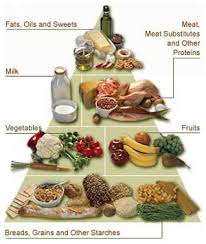
Specific to bone density, I have read in a few places that too much of the fiber found in grains and legumes can interfere with calcium absorption and therefore contribute to weaker bones. I will continue to avoid white flour, which seems to be everywhere in our U.S. diet (pasta, buns, snacks, cookies). But based on the Bible's clear blessing on eating bread (whole grain bread) as a good thing I am deciding now to not worry about cutting out or drastically reducing grain consumption. Jesus blessed bread and that's good enough for me.
Specific to bone density, I have read in a few places that too much of the fiber found in grains and legumes can interfere with calcium absorption and therefore contribute to weaker bones. I will continue to avoid white flour, which seems to be everywhere in our U.S. diet (pasta, buns, snacks, cookies). But based on the Bible's clear blessing on eating bread (whole grain bread) as a good thing I am deciding now to not worry about cutting out or drastically reducing grain consumption. Jesus blessed bread and that's good enough for me.
"Shameless Audacity" Rewarded
~Luke 11.5-8 Then Jesus said to them, “Suppose you have a friend, and you go to him at midnight and say, ‘Friend, lend me three loaves of bread; a friend of mine on a journey has come to me, and I have no food to offer him.’ And suppose the one inside answers, ‘Don’t bother me. The door is already locked, and my children and I are in bed. I can’t get up and give you anything.’ I tell you, even though he will not get up and give you the bread because of friendship, yet because of your shameless audacity he will surely get up and give you as much as you need.
Another translation says "shameless persistence." So like the widow before the corrupt judge (Luke 18), this is another keep-on-asking-and-never-give-up story.
But what can I learn here about what to eat? Like the hero in this story, sometimes people go to bed with no food in the house. Thankfully I have never done this.
If a late night guest shows up, the staple of bread is appropriate to offer. If there's no bread, go and with shameless audacity ask a neighbor for some.
Another translation says "shameless persistence." So like the widow before the corrupt judge (Luke 18), this is another keep-on-asking-and-never-give-up story.
But what can I learn here about what to eat? Like the hero in this story, sometimes people go to bed with no food in the house. Thankfully I have never done this.
If a late night guest shows up, the staple of bread is appropriate to offer. If there's no bread, go and with shameless audacity ask a neighbor for some.
Tuesday, June 28, 2011
Daily provision
~Luke 11.3 Give us each day our daily bread. New American Standard
~Luke 11.3 Give us day by day the food we need. Good News Translation
~Luke 11.3 Keep us alive with three square meals. The Message
~Luke 11.3 Our appointed bread be giving us daily. Young's Literal Translation
The Lord's response to disciples asking him to teach them how to pray is short and to the point. It covers the basics, the foundations of our walk with him. One of those bottom line basics is depending on him for our daily provision. Food here, bread, is a picture I think of asking him for everything we need. What food do I need for stronger bones? I should be asking him for it, not just for the food itself, but for the knowledge and will to to choose to eat that.
God, give me today the food my body, your temple, needs for health and strength. And please help me not to put too much other junk in with it.
~Luke 11.3 Give us day by day the food we need. Good News Translation
~Luke 11.3 Keep us alive with three square meals. The Message
~Luke 11.3 Our appointed bread be giving us daily. Young's Literal Translation
The Lord's response to disciples asking him to teach them how to pray is short and to the point. It covers the basics, the foundations of our walk with him. One of those bottom line basics is depending on him for our daily provision. Food here, bread, is a picture I think of asking him for everything we need. What food do I need for stronger bones? I should be asking him for it, not just for the food itself, but for the knowledge and will to to choose to eat that.
God, give me today the food my body, your temple, needs for health and strength. And please help me not to put too much other junk in with it.
Friday, June 24, 2011
Priorities, My Dear
Jesus is welcomed into Martha's home as he travels. Here's Kenneth Wuest's translation.
~Luke 10.40-42 Martha was going around in circles, over-occupied with preparing the meal. And bursting in upon Jesus she assumed a stance over Him and said, "Lord, is it not a concern to you that my sister has let me down to be preparing the meal alone? Speak therefore to her at once that she take hold and do her part with me." And answering, the Lord said to her, "Martha, Martha, you are worried and excited about many things, but of few things there is need, or of one, for Mary chose out for herself the good portion, which is of such a nature that it shall not hastily be snatched away from her."
Nothing here specifically about food, but Martha's yikes!-company's-here flurry as she works to prepare this meal is familiar to me. This thought of keeping the higher priority in mind even as we take care of physical needs is also beautifully stated in Matthew 5's Sermon on the Mount. Yes, of course! I know; I know. Still, a peek at that meal Martha was preparing would be fascinating.
~Luke 10.40-42 Martha was going around in circles, over-occupied with preparing the meal. And bursting in upon Jesus she assumed a stance over Him and said, "Lord, is it not a concern to you that my sister has let me down to be preparing the meal alone? Speak therefore to her at once that she take hold and do her part with me." And answering, the Lord said to her, "Martha, Martha, you are worried and excited about many things, but of few things there is need, or of one, for Mary chose out for herself the good portion, which is of such a nature that it shall not hastily be snatched away from her."
Nothing here specifically about food, but Martha's yikes!-company's-here flurry as she works to prepare this meal is familiar to me. This thought of keeping the higher priority in mind even as we take care of physical needs is also beautifully stated in Matthew 5's Sermon on the Mount. Yes, of course! I know; I know. Still, a peek at that meal Martha was preparing would be fascinating.
Wednesday, June 22, 2011
Oil and Wine
~Luke 10:30, 33, 34 A man was going down from Jerusalem to Jericho, when he was attacked by robbers. They stripped him of his clothes, beat him and went away, leaving him half dead. . . . . But a Samaritan, as he traveled, came where the man was; and when he saw him, he took pity on him. He went to him and bandaged his wounds, pouring on oil and wine. Then he put the man on his own donkey, brought him to an inn and took care of him.
Oil and wine as dressing for a wound seems strange to us, but was probably not uncommon in Jesus' day. My literal translation Bible says "soothing oil" and "disinfecting wine." These substances also have symbolic meaning, the oil of the anointing of the Holy Spirit, the wine of joy in God's kingdom. So these substances have other valuable uses besides just consumption. We can apply them liberally to our hurts.
Oil and wine as dressing for a wound seems strange to us, but was probably not uncommon in Jesus' day. My literal translation Bible says "soothing oil" and "disinfecting wine." These substances also have symbolic meaning, the oil of the anointing of the Holy Spirit, the wine of joy in God's kingdom. So these substances have other valuable uses besides just consumption. We can apply them liberally to our hurts.
Wednesday, June 15, 2011
Three Eggs: Prophetic?
In a short Spanish folk story a poor couple who has only five eggs for the day's food argue over which of them gets the extra one after both eat two. (They don't think of splitting it.) By trickery, the hungry woman wins out and gobbles down the third egg before her surprised husband can do anything about it.
In a native American story a lost woman hungry for love eats three Easter eggs offered by a stranger who she then goes off and parties with before wondering off into the dessert to die.
Different authors, different books, different cultural settings. Two women. Three eggs each in one meal. But the other thing these stories have in common is that I happened to read both of them in the same day. One book I stumbled on because Emma had it here for Spanish practice; the other I had picked up at the library. What are the odds that one person would happen to read about a woman eating three eggs in one meal in two unrelated books on the same day. Not high I think. That makes me wonder.
In a native American story a lost woman hungry for love eats three Easter eggs offered by a stranger who she then goes off and parties with before wondering off into the dessert to die.
Different authors, different books, different cultural settings. Two women. Three eggs each in one meal. But the other thing these stories have in common is that I happened to read both of them in the same day. One book I stumbled on because Emma had it here for Spanish practice; the other I had picked up at the library. What are the odds that one person would happen to read about a woman eating three eggs in one meal in two unrelated books on the same day. Not high I think. That makes me wonder.
Monday, June 6, 2011
Kids here
Our kids from Mexico are here this week and next. Not only that, but we have other beloved family members coming in to see them. It's "happy chaos" to use Gwynne McQueen's term. I feel blessed and am thankful not to be distracted with lesson plans and essay feedback this summer. Yea! Heat so far has been intermittent and rain abundant. Greens are up in the garden and we're getting a weekly allotment from a "share" we purchased of a local farm. I've been going through fresh produce at an amazing rate, encouraged by the example of Ellen's midwife in January.
Water II
~John 7.37-39 On the final and climactic day of the Feast, Jesus took his stand. He cried out, "If anyone thirsts, let him come to me and drink. Rivers of living water will brim and spill out of the depths of anyone who believes in me this way, just as the Scripture says." (He said this in regard to the Spirit, whom those who believed in him were about to receive. The Spirit had not yet been given because Jesus had not yet been glorified.)
Overflowing water--a beautiful picture. If you're thirsty, go for the water.
Overflowing water--a beautiful picture. If you're thirsty, go for the water.
Wednesday, June 1, 2011
Water
~Mark 9.41 If anyone gives you even a cup of water because you belong to the Messiah, I tell you the truth, that person will surely be rewarded.
The Message version says: Why, anyone by just giving you a cup of water in my name is on our side. Count on it that God will notice.
Water: drink it; give it freely.
The Message version says: Why, anyone by just giving you a cup of water in my name is on our side. Count on it that God will notice.
Water: drink it; give it freely.
Friday, May 27, 2011
Yeast
~Matthew 16.5-12 When they went across the lake, the disciples forgot to take bread.
"Be careful, Jesus said to them. Be on your guard against the yeast of the Pharisees and Sadducees."
They discussed this among themselves and said, It is because we didn't bring any bread.
Aware of their discussion, Jesus asked, "You of little faith, why are you talking among yourselves about having no bread? Do you still not understand? Don't you remember the five loaves for the five thousand, and how many basketfuls you gathered? Or the seven loaves for the four thousand, and how many basketfuls you gathered? How is it you don't understand that I was not talking to you about bread? But be on your guard against the yeast of the Pharisees and Sadducees."
Then they understood that he was not telling them to guard against the yeast used in bread, but against the teaching of the Pharisees and Sadducees.
Bread is good; yeast is fine; but be careful of bad teaching because it is easily spread. Listen carefully to what God says to you so that you don't misinterpret it.
"Be careful, Jesus said to them. Be on your guard against the yeast of the Pharisees and Sadducees."
They discussed this among themselves and said, It is because we didn't bring any bread.
Aware of their discussion, Jesus asked, "You of little faith, why are you talking among yourselves about having no bread? Do you still not understand? Don't you remember the five loaves for the five thousand, and how many basketfuls you gathered? Or the seven loaves for the four thousand, and how many basketfuls you gathered? How is it you don't understand that I was not talking to you about bread? But be on your guard against the yeast of the Pharisees and Sadducees."
Then they understood that he was not telling them to guard against the yeast used in bread, but against the teaching of the Pharisees and Sadducees.
Bread is good; yeast is fine; but be careful of bad teaching because it is easily spread. Listen carefully to what God says to you so that you don't misinterpret it.
Tuesday, May 24, 2011
Seven baskets leftover the second time. Hmmm.
~Mark 8.1-10 During those days another large crowd gathered. Since they had nothing to eat, Jesus called his disciples to him and said, “I have compassion for these people; they have already been with me three days and have nothing to eat. If I send them home hungry, they will collapse on the way, because some of them have come a long distance.”
His disciples answered, “But where in this remote place can anyone get enough bread to feed them?”
“How many loaves do you have?” Jesus asked.
“Seven,” they replied.
He told the crowd to sit down on the ground. When he had taken the seven loaves and given thanks, he broke them and gave them to his disciples to distribute to the people, and they did so. They had a few small fish as well; he gave thanks for them also and told the disciples to distribute them. The people ate and were satisfied. Afterward the disciples picked up seven basketfuls of broken pieces that were left over. About four thousand were present.
Jesus is concerned that people get enough to eat--not a big problem in our community today, although it is in some parts of the world--and he is willing and able to make ample provision for that. Again the staples are bread and fish.
About the baskets leftover
1) My first thought was, "ah, he's getting more accurate!"
2) One commentary says that of course he made exactly the right amount, but some chose not to eat, so there were leftovers.
3) Other commentaries say the 12 and 7 baskets point to God's abundant provision for both the Jews (12 tribes, etc.) and the gentiles (70 nations listed in Genesis 10).
His disciples answered, “But where in this remote place can anyone get enough bread to feed them?”
“How many loaves do you have?” Jesus asked.
“Seven,” they replied.
He told the crowd to sit down on the ground. When he had taken the seven loaves and given thanks, he broke them and gave them to his disciples to distribute to the people, and they did so. They had a few small fish as well; he gave thanks for them also and told the disciples to distribute them. The people ate and were satisfied. Afterward the disciples picked up seven basketfuls of broken pieces that were left over. About four thousand were present.
Jesus is concerned that people get enough to eat--not a big problem in our community today, although it is in some parts of the world--and he is willing and able to make ample provision for that. Again the staples are bread and fish.
About the baskets leftover
1) My first thought was, "ah, he's getting more accurate!"
2) One commentary says that of course he made exactly the right amount, but some chose not to eat, so there were leftovers.
3) Other commentaries say the 12 and 7 baskets point to God's abundant provision for both the Jews (12 tribes, etc.) and the gentiles (70 nations listed in Genesis 10).
Monday, May 23, 2011
Scraps to the dog
~Matthew 15.25-28 The woman came and knelt before him. “Lord, help me!” she said.
He replied, “It is not right to take the children’s bread and toss it to the dogs.”
“Yes it is, Lord,” she said. “Even the dogs eat the crumbs that fall from their master’s table.”
Then Jesus said to her, “Woman, you have great faith! Your request is granted.” And her daughter was healed at that moment.
Preceding this, verse 21 says that Jesus withdrew. Apparently he had decided a break from the ever-present crowds was in order. But, alas, he was found by another needy person. Maybe Jesus is testing her as he did in telling the crowd they were to drink his blood. But this woman is not to be put off, even by insult. The Lord rewards her persistent faith by granting her request.
The food point to note here is that the table scraps go to the pet!
He replied, “It is not right to take the children’s bread and toss it to the dogs.”
“Yes it is, Lord,” she said. “Even the dogs eat the crumbs that fall from their master’s table.”
Then Jesus said to her, “Woman, you have great faith! Your request is granted.” And her daughter was healed at that moment.
Preceding this, verse 21 says that Jesus withdrew. Apparently he had decided a break from the ever-present crowds was in order. But, alas, he was found by another needy person. Maybe Jesus is testing her as he did in telling the crowd they were to drink his blood. But this woman is not to be put off, even by insult. The Lord rewards her persistent faith by granting her request.
The food point to note here is that the table scraps go to the pet!
Ham
~Mark 7.18b-19 “Don’t you see that nothing that enters a person from the outside can defile them? For it doesn’t go into their heart but into their stomach, and then out of the body.” (In saying this, Jesus declared all foods clean.)
One more thought before I leave this passage. The really big news here to the followers of Jesus must have been the idea that they no longer had to worry about whether a food was defined as "clean" or "unclean" according to Jewish law. This was radical. Now Jesus has okay'd ham sandwiches.
One more thought before I leave this passage. The really big news here to the followers of Jesus must have been the idea that they no longer had to worry about whether a food was defined as "clean" or "unclean" according to Jewish law. This was radical. Now Jesus has okay'd ham sandwiches.
Friday, May 20, 2011
Default mode for poor health
~Mark 7.1-5 The Pharisees and some of the teachers of the law who had come from Jerusalem gathered around Jesus and saw some of his disciples eating food with hands that were . . . unwashed. (The Pharisees . . . do not eat unless they give their hands a ceremonial washing . . . . When they come from the marketplace they do not eat unless they wash. And they . . . [wash] cups, pitchers and kettles.)
So the Pharisees and teachers of the law asked Jesus, “Why don’t your disciples live according to the tradition of the elders instead of eating their food with defiled hands?”
First, I want to point out that while Jewish culture has honored the value of hand washing since centuries before Christ, it wasn't until the mid 1800's that Western culture began to catch on to the benefits of this. Here, it's not the hand washing, but the legalism that Jesus is resisting.
~Mark 7.18-23 [Jesus replied.] "Don't you see that what you swallow can't contaminate you? It doesn't enter your heart but your stomach, works its way through the intestines, and is finally flushed." (That took care of dietary quibbling; Jesus was saying that all foods are fit to eat.)
He went on: "It's what comes out of a person that pollutes: obscenities, lusts, thefts, murders, adulteries, greed, depravity, deceptive dealings, carousing, mean looks, slander, arrogance, foolishness—all these are vomit from the heart. There is the source of your pollution."
So if "all foods are fit to eat" why bother with this what-to-eat study? The food and health situation today is profoundly different than in the first century. At that time, people walked everywhere, even to cities miles away. Their daily work was in large part physical labor. And they got their food from local farmers at the marketplace. Today we aren't nearly so physically active; we do desk labor; and most Americans get their food from packages made in distant places by ConAgra, Kellogs, and Kraft.
Quite possibly if the average first century guy gave no thought to it but just ate what most people in the culture around him were eating, he'd have a strong chance of being in reasonably good condition.
I assert that today in the USA if a person gives no thought to it but just eats what most others around him are eating he will, eventually, get fat and sick. This is the default mode.
So the Pharisees and teachers of the law asked Jesus, “Why don’t your disciples live according to the tradition of the elders instead of eating their food with defiled hands?”
First, I want to point out that while Jewish culture has honored the value of hand washing since centuries before Christ, it wasn't until the mid 1800's that Western culture began to catch on to the benefits of this. Here, it's not the hand washing, but the legalism that Jesus is resisting.
~Mark 7.18-23 [Jesus replied.] "Don't you see that what you swallow can't contaminate you? It doesn't enter your heart but your stomach, works its way through the intestines, and is finally flushed." (That took care of dietary quibbling; Jesus was saying that all foods are fit to eat.)
He went on: "It's what comes out of a person that pollutes: obscenities, lusts, thefts, murders, adulteries, greed, depravity, deceptive dealings, carousing, mean looks, slander, arrogance, foolishness—all these are vomit from the heart. There is the source of your pollution."
So if "all foods are fit to eat" why bother with this what-to-eat study? The food and health situation today is profoundly different than in the first century. At that time, people walked everywhere, even to cities miles away. Their daily work was in large part physical labor. And they got their food from local farmers at the marketplace. Today we aren't nearly so physically active; we do desk labor; and most Americans get their food from packages made in distant places by ConAgra, Kellogs, and Kraft.
Quite possibly if the average first century guy gave no thought to it but just ate what most people in the culture around him were eating, he'd have a strong chance of being in reasonably good condition.
I assert that today in the USA if a person gives no thought to it but just eats what most others around him are eating he will, eventually, get fat and sick. This is the default mode.
Wednesday, May 18, 2011
Real Bread
~John 6.35 Then Jesus declared, “I am the bread of life. Whoever comes to me will never go hungry, and whoever believes in me will never be thirsty.
~John 6.51 I am the living bread that came down from heaven. Whoever eats this bread will live forever. This bread is my flesh, which I will give for the life of the world.”
Jesus is the bread of life, the staple, the basic necessity to keep us going. This metaphor blesses bread, real bread, as something valuable to our diets. I don't mean the fluffy, nutrient-stripped stuff, bleached white with a handful of vitamins added back in; I don't mean donuts or plain bagels or the usual pasta. I mean food made from fiber-rich, nutrient-dense whole grain. (You can get some at Great Harvest Bakery which grinds the wheat for the day's flour every morning. Yummy!)
I will add a footnote, a foodnote, on the no-carb, high-protein diet. Yes, it's possible to loose weight on this, but if we were eating real grain rather than the highly processed stuff in the cookies, crackers, breads, muffins, pastas, and cakes that fill grocery store shelves, we could keep the bread and eat more healthful amounts of the meat.
~John 6.51 I am the living bread that came down from heaven. Whoever eats this bread will live forever. This bread is my flesh, which I will give for the life of the world.”
Jesus is the bread of life, the staple, the basic necessity to keep us going. This metaphor blesses bread, real bread, as something valuable to our diets. I don't mean the fluffy, nutrient-stripped stuff, bleached white with a handful of vitamins added back in; I don't mean donuts or plain bagels or the usual pasta. I mean food made from fiber-rich, nutrient-dense whole grain. (You can get some at Great Harvest Bakery which grinds the wheat for the day's flour every morning. Yummy!)
I will add a footnote, a foodnote, on the no-carb, high-protein diet. Yes, it's possible to loose weight on this, but if we were eating real grain rather than the highly processed stuff in the cookies, crackers, breads, muffins, pastas, and cakes that fill grocery store shelves, we could keep the bread and eat more healthful amounts of the meat.
Tuesday, May 17, 2011
Eating in the desert with Jesus
The language is quaint, but I really like this commentary on the feeding-five-thousand story from http://mhc.biblecommenter.com/matthew/14.htm
Matthew Henry's Concise Commentary
14:13-21 When Christ and his word withdraw, it is best for us to follow, seeking the means of grace for our souls before any worldly advantages. The presence of Christ and his gospel, makes a desert not only tolerable, but desirable. This little supply of bread was increased by Christ's creating power, till the whole multitude were satisfied. In seeking the welfare of men's souls, we should have compassion on their bodies likewise. Let us also remember always to crave a blessing on our meals, and learn to avoid all waste, as frugality is the proper source of liberality. See in this miracle an emblem of the Bread of life, which came down from heaven to sustain our perishing souls. The provisions of Christ's gospel appear mean and scanty to the world, yet they satisfy all that feed on him in their hearts by faith with thanksgiving.
Matthew Henry's Concise Commentary
14:13-21 When Christ and his word withdraw, it is best for us to follow, seeking the means of grace for our souls before any worldly advantages. The presence of Christ and his gospel, makes a desert not only tolerable, but desirable. This little supply of bread was increased by Christ's creating power, till the whole multitude were satisfied. In seeking the welfare of men's souls, we should have compassion on their bodies likewise. Let us also remember always to crave a blessing on our meals, and learn to avoid all waste, as frugality is the proper source of liberality. See in this miracle an emblem of the Bread of life, which came down from heaven to sustain our perishing souls. The provisions of Christ's gospel appear mean and scanty to the world, yet they satisfy all that feed on him in their hearts by faith with thanksgiving.
Hard-to-swallow Metaphore
~John 6.32-35 Jesus said to them, “. . . it is my Father who gives you the true bread from heaven. For the bread of God is the bread that comes down from heaven and gives life to the world.”
“Sir,” they said, “always give us this bread.”
Then Jesus declared, “I am the bread of life. Whoever comes to me will never go hungry, and whoever believes in me will never be thirsty.
~John 6.48-58 I am the bread of life. Your ancestors ate the manna in the wilderness, yet they died. But here is the bread that comes down from heaven, which anyone may eat and not die. I am the living bread that came down from heaven. Whoever eats this bread will live forever. This bread is my flesh, which I will give for the life of the world.”
Then the Jews began to argue sharply among themselves, “How can this man give us his flesh to eat?”
Jesus said to them, “Very truly I tell you, unless you eat the flesh of the Son of Man and drink his blood, you have no life in you. Whoever eats my flesh and drinks my blood has eternal life, and I will raise them up at the last day. For my flesh is real food and my blood is real drink. Whoever eats my flesh and drinks my blood remains in me, and I in them. Just as the living Father sent me and I live because of the Father, so the one who feeds on me will live because of me. This is the bread that came down from heaven. Your ancestors ate manna and died, but whoever feeds on this bread will live forever.”
~John 6.66 From this time many of his disciples turned back and no longer followed him.
When Jesus challenges the recently fed, enthusiastic crowd of admirers with this gross picture, they back off. Eating human flesh and drinking any blood is not on the menu. Why would he state life in the kingdom of God in this repulsive way? Why make it more difficult to accept?
Jesus knows the heart of man so well. When he presents himself to the people as the bread which will enable them to never hunger again, everyone wants some. I can imagine arguments breaking out as each scuffles for his place in the "Free Magic Bread!" line. But Christ isn't looking for people who want a bargain. He wants dedicated, radically loving followers who are so identified with him that it's as if they've consumed his very being. They are not just buying into a philosophy of life or a religion; they are one with him. The cost is high. Theologian Bill Jackson (http://www.nothinsgonnastopit.com/blog) used to tell us that it's not so much "God has a wonderful plan for your life" as it is "come and die."
Then we get the real bread which satisfies completely and lasts for eternity, and that is the wonderful plan for our lives.
“Sir,” they said, “always give us this bread.”
Then Jesus declared, “I am the bread of life. Whoever comes to me will never go hungry, and whoever believes in me will never be thirsty.
~John 6.48-58 I am the bread of life. Your ancestors ate the manna in the wilderness, yet they died. But here is the bread that comes down from heaven, which anyone may eat and not die. I am the living bread that came down from heaven. Whoever eats this bread will live forever. This bread is my flesh, which I will give for the life of the world.”
Then the Jews began to argue sharply among themselves, “How can this man give us his flesh to eat?”
Jesus said to them, “Very truly I tell you, unless you eat the flesh of the Son of Man and drink his blood, you have no life in you. Whoever eats my flesh and drinks my blood has eternal life, and I will raise them up at the last day. For my flesh is real food and my blood is real drink. Whoever eats my flesh and drinks my blood remains in me, and I in them. Just as the living Father sent me and I live because of the Father, so the one who feeds on me will live because of me. This is the bread that came down from heaven. Your ancestors ate manna and died, but whoever feeds on this bread will live forever.”
~John 6.66 From this time many of his disciples turned back and no longer followed him.
When Jesus challenges the recently fed, enthusiastic crowd of admirers with this gross picture, they back off. Eating human flesh and drinking any blood is not on the menu. Why would he state life in the kingdom of God in this repulsive way? Why make it more difficult to accept?
Jesus knows the heart of man so well. When he presents himself to the people as the bread which will enable them to never hunger again, everyone wants some. I can imagine arguments breaking out as each scuffles for his place in the "Free Magic Bread!" line. But Christ isn't looking for people who want a bargain. He wants dedicated, radically loving followers who are so identified with him that it's as if they've consumed his very being. They are not just buying into a philosophy of life or a religion; they are one with him. The cost is high. Theologian Bill Jackson (http://www.nothinsgonnastopit.com/blog) used to tell us that it's not so much "God has a wonderful plan for your life" as it is "come and die."
Then we get the real bread which satisfies completely and lasts for eternity, and that is the wonderful plan for our lives.
Monday, May 16, 2011
Rot
~John 6.26-27 Jesus answered, “Very truly I tell you, you are looking for me, not because you saw the signs I performed but because you ate the loaves and had your fill. Do not work for food that spoils, but for food that endures to eternal life, which the Son of Man will give you. For on him God the Father has placed his seal of approval.”
Because we are so fundamentally attached to our physical selves, this is a hard verse. It's difficult, for me anyway, to keep my eyes on the spiritual, invisible, eternal, the "food" that doesn't spoil. I'm so present with my body and the world as I perceive it through my senses. To disconnect a bit in prayer and meditation is, well, as the verse above says, it's work.
The other principle to be noted here is simply that food spoils. It makes me think of one of Michael Pollan's rules: Don't eat anything that doesn't rot. He has a two-year old Twinkie that has yet to show any sign of decomposing. This return to the soil is a natural part of the physical cycle of life.
Because we are so fundamentally attached to our physical selves, this is a hard verse. It's difficult, for me anyway, to keep my eyes on the spiritual, invisible, eternal, the "food" that doesn't spoil. I'm so present with my body and the world as I perceive it through my senses. To disconnect a bit in prayer and meditation is, well, as the verse above says, it's work.
The other principle to be noted here is simply that food spoils. It makes me think of one of Michael Pollan's rules: Don't eat anything that doesn't rot. He has a two-year old Twinkie that has yet to show any sign of decomposing. This return to the soil is a natural part of the physical cycle of life.
Tuesday, May 10, 2011
Leftovers!
~John 6.5-13 When Jesus looked up and saw a great crowd coming toward him, he said to Philip, “Where shall we buy bread for these people to eat?” He asked this only to test him, for he already had in mind what he was going to do.
Philip answered him, “It would take more than half a year’s wages to buy enough bread for each one to have a bite!”
Another of his disciples, Andrew, Simon Peter’s brother, spoke up, “Here is a boy with five small barley loaves and two small fish, but how far will they go among so many?”
Jesus said, “Have the people sit down.” There was plenty of grass in that place, and they sat down (about five thousand men were there). Jesus then took the loaves, gave thanks, and distributed to those who were seated as much as they wanted. He did the same with the fish.
When they had all had enough to eat, he said to his disciples, “Gather the pieces that are left over. Let nothing be wasted.” So they gathered them and filled twelve baskets with the pieces of the five barley loaves left over by those who had eaten.
John gives the only version of this event that tells us Jesus was testing Philip when he asked how they were going to feed so many people. Jesus knew that God the father is well able to provide and that he would do so. What did he use to feed such a crowd? Bread and fish. Where are the vegetables? Maybe they had dandelion greens all over that hillside!
The other thing I love about this is the Lord's request that the leftovers be collected so there is no waste. I hate to see things wasted. Here's is the Lord's official endorsement of leftovers! :-]
Philip answered him, “It would take more than half a year’s wages to buy enough bread for each one to have a bite!”
Another of his disciples, Andrew, Simon Peter’s brother, spoke up, “Here is a boy with five small barley loaves and two small fish, but how far will they go among so many?”
Jesus said, “Have the people sit down.” There was plenty of grass in that place, and they sat down (about five thousand men were there). Jesus then took the loaves, gave thanks, and distributed to those who were seated as much as they wanted. He did the same with the fish.
When they had all had enough to eat, he said to his disciples, “Gather the pieces that are left over. Let nothing be wasted.” So they gathered them and filled twelve baskets with the pieces of the five barley loaves left over by those who had eaten.
John gives the only version of this event that tells us Jesus was testing Philip when he asked how they were going to feed so many people. Jesus knew that God the father is well able to provide and that he would do so. What did he use to feed such a crowd? Bread and fish. Where are the vegetables? Maybe they had dandelion greens all over that hillside!
The other thing I love about this is the Lord's request that the leftovers be collected so there is no waste. I hate to see things wasted. Here's is the Lord's official endorsement of leftovers! :-]
Wednesday, May 4, 2011
Busy, busy, busy
~Mark 6.31 Then, because so many people were coming and going that they did not even have a chance to eat, [Jesus] said to them, “Come with me by yourselves to a quiet place and get some rest."
Jesus too had times of being so busy there wasn't even a chance to eat. That's busy. Even if I miss some sleep, or mail, or--let's be honest, Ruth--time focusing on God, I can find a few minutes to stuff something into my mouth. Possibly there was some access to food too, but it's interesting that Jesus calls his guys to a quiet place to rest, not a quiet place to eat.
Jesus too had times of being so busy there wasn't even a chance to eat. That's busy. Even if I miss some sleep, or mail, or--let's be honest, Ruth--time focusing on God, I can find a few minutes to stuff something into my mouth. Possibly there was some access to food too, but it's interesting that Jesus calls his guys to a quiet place to rest, not a quiet place to eat.
Saturday, April 30, 2011
A cup of water
~Matthew 10.42 And if you give even a cup of cold water to one of the least of my followers, you will surely be rewarded.
Water. Absolutely necessary for human life. Share it freely.
Water. Absolutely necessary for human life. Share it freely.
Workers deserve their food.
~Matthew 10.10
(Yes, I know the risk is low for strong, healthy, non-pregnant people, but since I was the one responsible for doctor visits and dealing with the misery of any diarrhea that occurred, I didn't see it as a risk worth taking.)
Don't hesitate to accept hospitality, because those who work deserve to be fed.~II Timothy 2.6
And hardworking farmers should be the first to enjoy the fruit of their labor.This reminds me of a similar verse often quoted by one of our daughters. Whenever Ellen or Audrey was cleaning, or more often cooking, they would remind me that I shouldn't “muzzle the ox" to keep it from eating as it worked. (The verse in Deuteronomy 25:4 says "treads out the grain.") This meant they should have unlimited blobs of dough as they made cookies, for example. This rationale worked fine until I started seeing bad news about salmonella in raw eggs. After that, it was only on occasional times I happened to have the pasteurized eggs in a box that that snack was allowed.
(Yes, I know the risk is low for strong, healthy, non-pregnant people, but since I was the one responsible for doctor visits and dealing with the misery of any diarrhea that occurred, I didn't see it as a risk worth taking.)
Thursday, April 28, 2011
Jesus prefers we travel light
~Mark 6.7-9 And he called his twelve disciples together and began sending them out two by two, giving them authority to cast out evil spirits. He told them to take nothing for their journey except a walking stick—no food, no traveler’s bag, no money. He allowed them to wear sandals but not to take a change of clothes.
This is a hard verse. I don't travel light, and I wouldn't think of starting a trip without packing some healthy snacks. If I don't pack fruit, nuts, or other good stuff, I'm left with convenience store offerings like Pringles, Otis Spunkmeyer muffins, and apple juice.
So what is Jesus' point? Total dependence on God? Being willing to accept from others? Focusing on the Kingdom rather than on physical concerns?
Of course, with no Coke, M&Ms, nor Doritos available, what was offered was much more likely to be natural, healthy food, right?
Maybe there's something cultural here. Maybe staying with someone, being hosted in their home and relying on them for food as well as shelter was a sign of trust or affirmation which would not happen if I came in with a cooler and a sleeping bag. Hmmm.
This is a hard verse. I don't travel light, and I wouldn't think of starting a trip without packing some healthy snacks. If I don't pack fruit, nuts, or other good stuff, I'm left with convenience store offerings like Pringles, Otis Spunkmeyer muffins, and apple juice.
So what is Jesus' point? Total dependence on God? Being willing to accept from others? Focusing on the Kingdom rather than on physical concerns?
Of course, with no Coke, M&Ms, nor Doritos available, what was offered was much more likely to be natural, healthy food, right?
Maybe there's something cultural here. Maybe staying with someone, being hosted in their home and relying on them for food as well as shelter was a sign of trust or affirmation which would not happen if I came in with a cooler and a sleeping bag. Hmmm.
Harvest
~Matthew 9.36-38 When [Jesus] saw the crowds, he had compassion on them because they were confused and helpless, like sheep without a shepherd. He said to his disciples, “The harvest is great, but the workers are few. So pray to the Lord who is in charge of the harvest; ask him to send more workers into his fields.”
To enjoy the grain, we have to harvest it.
To enjoy the grain, we have to harvest it.
Monday, April 25, 2011
Good fish, bad fish
~Matthew 13.47-48 “Again, the Kingdom of Heaven is like a fishing net that was thrown into the water and caught fish of every kind. When the net was full, they dragged it up onto the shore, sat down, and sorted the good fish into crates, but threw the bad ones away."
Fish was obviously a big part of the diet of first century Palestine. Health professionals today encourage us to eat more fish, at least a few servings per week. It's harder for inlanders like us here in Illinois to get good fresh fish, although, never having lived by big water and not being a connoisseur, I don't mind the frozen.
But I wonder what bad fish is. In the parable the fish has just been caught. It's fresh at least, so bad apparently doesn't mean rotten. Maybe it means not kosher? Maybe it means like carp or bottom feeders? I dunno.
Fish was obviously a big part of the diet of first century Palestine. Health professionals today encourage us to eat more fish, at least a few servings per week. It's harder for inlanders like us here in Illinois to get good fresh fish, although, never having lived by big water and not being a connoisseur, I don't mind the frozen.
But I wonder what bad fish is. In the parable the fish has just been caught. It's fresh at least, so bad apparently doesn't mean rotten. Maybe it means not kosher? Maybe it means like carp or bottom feeders? I dunno.
Saturday, April 23, 2011
Priority for those recovering from death
~Luke 8.54-55 Then Jesus took [the daughter who had died] by the hand and said in a loud voice, “My child, get up!” And at that moment her life returned, and she immediately stood up! Then Jesus told them to give her something to eat.
~also told in Mark 5.40-43
Doubtless this was an astounding, even shocking, and joyful moment in the lives of these parents--to be so anxious about the health of their girl, to have their hearts torn at her death, and then to watch this man come in and restore her to them. I can hardly imagine it. Probably they were overcome with awe and thankfulness at God's awesome power as demonstrated by Jesus in this moment. Who was this guy anyway? Were the relieved parents swamped with questions or did they just accept? Just as they were awash in the profound significance of this event, the Lord brings everyone back to our earth world by saying, "Hey, the kid's gotta be hungry. Get her something to eat!" It makes me think of the angel's word to Mary in her moment of stunned awe at the supernatural event in her life: "Your cousin Elizabeth is pregnant too." In both cases these words seem to give the overcome human a concrete physical marker to hang on to.
Eat? Yes, let's eat to recover strength. Let's eat to get our feet back on the ground. Let's eat to celebrate life!
~also told in Mark 5.40-43
Doubtless this was an astounding, even shocking, and joyful moment in the lives of these parents--to be so anxious about the health of their girl, to have their hearts torn at her death, and then to watch this man come in and restore her to them. I can hardly imagine it. Probably they were overcome with awe and thankfulness at God's awesome power as demonstrated by Jesus in this moment. Who was this guy anyway? Were the relieved parents swamped with questions or did they just accept? Just as they were awash in the profound significance of this event, the Lord brings everyone back to our earth world by saying, "Hey, the kid's gotta be hungry. Get her something to eat!" It makes me think of the angel's word to Mary in her moment of stunned awe at the supernatural event in her life: "Your cousin Elizabeth is pregnant too." In both cases these words seem to give the overcome human a concrete physical marker to hang on to.
Eat? Yes, let's eat to recover strength. Let's eat to get our feet back on the ground. Let's eat to celebrate life!
Size and Power
~Matthew 13:33-35 Jesus also used this illustration: “The Kingdom of Heaven is like the yeast a woman used in making bread. Even though she put only a little yeast in three measures of flour, it permeated every part of the dough.”
Yeast is powerful. Like the companion mustard seed story here, this one too makes the point that size is not a reliable indicator of power. So with regard to what to eat, be careful. People allergic to peanuts, for example, can have a whole body reaction to even a tiny bit. And, in the reverse, a little penicillin can have a positive effect.
Yeast is powerful. Like the companion mustard seed story here, this one too makes the point that size is not a reliable indicator of power. So with regard to what to eat, be careful. People allergic to peanuts, for example, can have a whole body reaction to even a tiny bit. And, in the reverse, a little penicillin can have a positive effect.
Sunday, April 17, 2011
Seeds and Weeds
~Matthew 13.24-30 Jesus told them another parable: “The kingdom of heaven is like a man who sowed good seed in his field. But while everyone was sleeping, his enemy came and sowed weeds among the wheat, and went away. When the wheat sprouted and formed heads, then the weeds also appeared.
“The owner’s servants came to him and said, ‘Sir, didn’t you sow good seed in your field? Where then did the weeds come from?’
“‘An enemy did this,’ he replied.
Since this is not meant to be a Bible commentary but only my search for what/how to eat, I leave out parts not related to that, like the end of this parable which actually contains its higher purpose. Looks like the main point of what is left is that there is value in seeds, not weeds. Good seed, that is, like wheat, one of the common grains of the first century Middle East and one we can easily enjoy today. I wish more people could learn to enjoy it in its more natural, whole-grain form which includes the nutritious germ and bran. It wasn't white Wonder Bread that this wheat of Jesus' day was made into.
“The owner’s servants came to him and said, ‘Sir, didn’t you sow good seed in your field? Where then did the weeds come from?’
“‘An enemy did this,’ he replied.
Since this is not meant to be a Bible commentary but only my search for what/how to eat, I leave out parts not related to that, like the end of this parable which actually contains its higher purpose. Looks like the main point of what is left is that there is value in seeds, not weeds. Good seed, that is, like wheat, one of the common grains of the first century Middle East and one we can easily enjoy today. I wish more people could learn to enjoy it in its more natural, whole-grain form which includes the nutritious germ and bran. It wasn't white Wonder Bread that this wheat of Jesus' day was made into.
Friday, April 15, 2011
Natural Miracle
~Mark 4.26-29 He also said, “This is what the kingdom of God is like. A man scatters seed on the ground. Night and day, whether he sleeps or gets up, the seed sprouts and grows, though he does not know how. All by itself the soil produces grain—first the stalk, then the head, then the full kernel in the head. As soon as the grain is ripe, he puts the sickle to it, because the harvest has come.”
What a beautiful reminder of how dependent we are. We plant the seed; we may weed; we harvest. And that can be hard work. But that's all we can do. The actual growing is up to God as he has designed our amazing world. Yes, we can apply fertilizer and pesticide, but really, the growing is out of our hands. It's a miracle of life, pulsing through our world every second of every day.
What a beautiful reminder of how dependent we are. We plant the seed; we may weed; we harvest. And that can be hard work. But that's all we can do. The actual growing is up to God as he has designed our amazing world. Yes, we can apply fertilizer and pesticide, but really, the growing is out of our hands. It's a miracle of life, pulsing through our world every second of every day.
Wednesday, April 13, 2011
Let's stay here
~Mark 4, Matthew 13, and Luke 8 Story of the Farmer Scattering Seed. While a large crowd was gathering and people were coming to Jesus from town after town, he told this parable: “A farmer went out to sow his seed. As he was scattering the seed, some fell along the path; it was trampled on, and the birds ate it up. Some fell on rocky ground, and when it came up, the plants withered because they had no moisture. Other seed fell among thorns, which grew up with it and choked the plants. Still other seed fell on good soil. It came up and yielded a crop, a hundred times more than was sown.”
Is there anything to learn about what to eat from this familiar parable of the farmer planting? For one thing, growing crops, agriculture, as opposed to just hunting and gathering, is acceptable. John the Baptist was eating a hunter-gatherer diet, right? But if we want something more dependable and something that will allow us to settle in one place as opposed to roaming after the food, planting seed that produces a good crop is desirable.
This makes me think of an early chapter in James Mitchner's The Source, a story of the land of Palestine, from cave man days to the 1960s. The thought of intentionally trying to get a plant to grow in a certain place was revolutionary.
Is there anything to learn about what to eat from this familiar parable of the farmer planting? For one thing, growing crops, agriculture, as opposed to just hunting and gathering, is acceptable. John the Baptist was eating a hunter-gatherer diet, right? But if we want something more dependable and something that will allow us to settle in one place as opposed to roaming after the food, planting seed that produces a good crop is desirable.
This makes me think of an early chapter in James Mitchner's The Source, a story of the land of Palestine, from cave man days to the 1960s. The thought of intentionally trying to get a plant to grow in a certain place was revolutionary.
Monday, April 11, 2011
Last Night
This entry has little to do with food, but my night was so strange, I'm posting it. :-]
Last night was bizarre. Friday night I went to bed at 12ish, read a bit, and surprised myself by sleeping until 10:30. Whoa! Saturday was a normal night’s rest. But last night was memorable. We went to bed at 11, but as I settled in with the window open I heard some action outside—two sounds: loud rattling like someone shaking a tin can full of marbles or getting ready to spray paint, and the sound of hard plastic rolling on pavement. I could have sworn it was a kid on a Big Wheel. Remember how noisy those are? This thing seemed to be going up and down in the street, which, of course, no one would let a little kid do in the daytime, much less late at night. It was such a weird combo of voices, rattles, and Big Wheels rolling that I got up to investigate.
I felt pretty brave going outside without Steve home. It was dark, so I couldn’t see the thing, but I could clearly hear it. I don’t know if “it” or “they” saw me, or were headed off anyway, but as I walked toward the intersection, it went west, past our house and the neighbors’ and up the street. I could tell its movement clearly from the sound but never did glimpse even a shadow of movement. It was so weird, like chasing down one of CS Lewis’s Dufflepuds. Emma had heard it too, and she also came out to the corner where I was standing puzzled.
“What’s that?” she asked pointing to a little light glowing two-thirds of the way across the pavement, toward Bella’s house. I had seen it, even from the bedroom window, but my vision being what it is, just thought it was a reflection. Now it looked bright and obvious. Since the Big Wheels had receded into the night and there was no traffic or other sign of life, we walked out into the street to satisfy our curiosity at least on one point.
Sure enough, it was a tiny light bulb. Emma bumped it with her toe, then bravely picked it up. It was a single light sitting in the middle of a disc. We had no idea where it came from or what it was for. Em set it on the side of the road and, mystified, we walked back to the house arm-in-arm. The night was quiet . . . for about thirty minutes.
At 12:30 I was maybe starting to doze when Jesse rang the bell to go out. Forget it, Dog! But a minute later he was whining at the bottom of the stairs. Sigh. I got up and put him out swearing that henceforth, it was warm enough for him to be put outside for the night when we went to bed. Annoying dog.
The big thunder, lightening, rain, and wind rolled in at 1. I listened to it, but did not go offer to let Jess back inside. I started to wonder why I wasn’t sleeping. I had not OD’d on dark chocolate, nor had any strong tea tonig . . . . Ah. Wait a sec. My boss and I went to the “soft opening” of a Thai student’s new restaurant. Wonderful food! And a tall, delicious glass of green tea frappe. That must be it. I had no thought of caffeine as I happily guzzled that drink to the last drop. With that memory I started to wonder how I was going to be sure and wake up in time in the morning assuming I eventually did go to sleep. At 8:45 a.m. my bus would come right by where we’d left the tiny light. That’s when I started fiddling with the alarm clock. I must have pushed buttons on that thing for ten minutes, but no action or combination could get the alarm off its 5:30 a.m. setting. Great. I decided to just let it wake me up at 5:30 and then set the nap button for 90 minutes. Good plan. Light off. Head back to pillow. Good night, world.
You won’t believe this, but maybe half hour later at 2ish my cell phone’s low battery signal sounded. At this point I’m starting to wonder if God wants me to get up and pray. After plugging the phone in, I fall back into bed and do pray—I may have prayed for you—but it’s drowsy, lazy prayer. Again it is a half hour or so until the next event of the night is upon me: a second wave of thunderstorm. That was maybe 2:30 or 3.
Finally I went to sleep after the second storm, but, sometime before four I woke up from a bad dream, made worse by the fact that I couldn’t remember the details of it. So, maybe it’s Satan not God who doesn’t want me to sleep tonight?
At 5:30 the alarm clock dutifully goes off; I turn the nap alarm on as planned and ninety minutes later it gets me up for the day. At least I didn’t oversleep. Yes, this is a true story and, no, I don’t usually have such problems with sleeping. I hope for better tonight if I can stay awake long enough to go to bed on time. Life is strange.
Last night was bizarre. Friday night I went to bed at 12ish, read a bit, and surprised myself by sleeping until 10:30. Whoa! Saturday was a normal night’s rest. But last night was memorable. We went to bed at 11, but as I settled in with the window open I heard some action outside—two sounds: loud rattling like someone shaking a tin can full of marbles or getting ready to spray paint, and the sound of hard plastic rolling on pavement. I could have sworn it was a kid on a Big Wheel. Remember how noisy those are? This thing seemed to be going up and down in the street, which, of course, no one would let a little kid do in the daytime, much less late at night. It was such a weird combo of voices, rattles, and Big Wheels rolling that I got up to investigate.
I felt pretty brave going outside without Steve home. It was dark, so I couldn’t see the thing, but I could clearly hear it. I don’t know if “it” or “they” saw me, or were headed off anyway, but as I walked toward the intersection, it went west, past our house and the neighbors’ and up the street. I could tell its movement clearly from the sound but never did glimpse even a shadow of movement. It was so weird, like chasing down one of CS Lewis’s Dufflepuds. Emma had heard it too, and she also came out to the corner where I was standing puzzled.
“What’s that?” she asked pointing to a little light glowing two-thirds of the way across the pavement, toward Bella’s house. I had seen it, even from the bedroom window, but my vision being what it is, just thought it was a reflection. Now it looked bright and obvious. Since the Big Wheels had receded into the night and there was no traffic or other sign of life, we walked out into the street to satisfy our curiosity at least on one point.
Sure enough, it was a tiny light bulb. Emma bumped it with her toe, then bravely picked it up. It was a single light sitting in the middle of a disc. We had no idea where it came from or what it was for. Em set it on the side of the road and, mystified, we walked back to the house arm-in-arm. The night was quiet . . . for about thirty minutes.
At 12:30 I was maybe starting to doze when Jesse rang the bell to go out. Forget it, Dog! But a minute later he was whining at the bottom of the stairs. Sigh. I got up and put him out swearing that henceforth, it was warm enough for him to be put outside for the night when we went to bed. Annoying dog.
The big thunder, lightening, rain, and wind rolled in at 1. I listened to it, but did not go offer to let Jess back inside. I started to wonder why I wasn’t sleeping. I had not OD’d on dark chocolate, nor had any strong tea tonig . . . . Ah. Wait a sec. My boss and I went to the “soft opening” of a Thai student’s new restaurant. Wonderful food! And a tall, delicious glass of green tea frappe. That must be it. I had no thought of caffeine as I happily guzzled that drink to the last drop. With that memory I started to wonder how I was going to be sure and wake up in time in the morning assuming I eventually did go to sleep. At 8:45 a.m. my bus would come right by where we’d left the tiny light. That’s when I started fiddling with the alarm clock. I must have pushed buttons on that thing for ten minutes, but no action or combination could get the alarm off its 5:30 a.m. setting. Great. I decided to just let it wake me up at 5:30 and then set the nap button for 90 minutes. Good plan. Light off. Head back to pillow. Good night, world.
You won’t believe this, but maybe half hour later at 2ish my cell phone’s low battery signal sounded. At this point I’m starting to wonder if God wants me to get up and pray. After plugging the phone in, I fall back into bed and do pray—I may have prayed for you—but it’s drowsy, lazy prayer. Again it is a half hour or so until the next event of the night is upon me: a second wave of thunderstorm. That was maybe 2:30 or 3.
Finally I went to sleep after the second storm, but, sometime before four I woke up from a bad dream, made worse by the fact that I couldn’t remember the details of it. So, maybe it’s Satan not God who doesn’t want me to sleep tonight?
At 5:30 the alarm clock dutifully goes off; I turn the nap alarm on as planned and ninety minutes later it gets me up for the day. At least I didn’t oversleep. Yes, this is a true story and, no, I don’t usually have such problems with sleeping. I hope for better tonight if I can stay awake long enough to go to bed on time. Life is strange.
Subscribe to:
Posts (Atom)